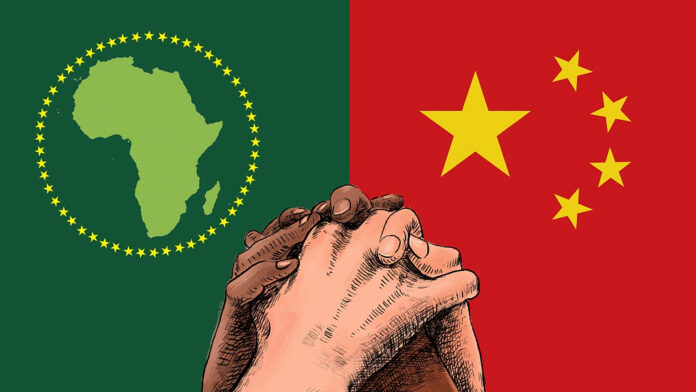
As the 2026 calendar shifts to May, the African continent’s economic landscape appears to stand at a historic crossroads. On May 1, 2026, China officially implemented its historic policy of granting 100% duty-free access to products imported from 53 African countries. Although this “unprecedented” market opportunity seems to herald a new era of prosperity, leaders of the African Union (AU) and the African Union Development Agency (AUDA-NEPAD) are issuing an urgent warning: having market access does not equate to being successful in that market.
The “readiness gap” between the right to sell and the capacity to produce has now become the primary challenge for African industrialization. During a high-level meeting of the African Diplomatic Corps, the CEO of AUDA-NEPAD, Nardos Bekele-Thomas, and the Chairperson of the African Union Commission, Mahamoud Ali Youssouf, stated that unless a fundamental shift in national policy is made, the continent is highly likely to repeat past failures.
For decades, African trade relied on initiatives like the U.S. African Growth and Opportunity Act (AGOA) and Economic Partnership Agreements (EPAs) with various European nations. However, history has been a stern teacher. Despite these duty-free opportunities, many African economies remained trapped in a cycle of exporting raw materials—such as crude oil, copper, and cobalt—while purchasing high-value machinery and electronics.
In her speech, Ms. Nardos Bekele-Thomas noted, “The real challenge is not China opening its market; the challenge is whether Africa demonstrates the strategic clarity, institutional coordination, and economic will required to transform this opportunity into industrial transition.”
2025 data shows that while trade between China and Africa reached $348 billion, the trade balance still tilts toward China with a $102 billion deficit. Experts argue that tariffs have never been the primary obstacle. Studies indicate that even before this new policy, nearly 70% of African products entered China duty-free. The true hurdles are a lack of product
The African Continental Free Trade Area (AfCFTA) is being viewed as a vital tool to bridge this quality, the absence of standard certification, and weak logistics systems.
readiness gap. Instead of 54 countries attempting to negotiate individually with the world’s second-largest economy (China), the African Union is pushing for a “collective and strategic” approach.
By 2035, AfCFTA is expected to increase Africa’s total exports by 29%. However, leaders argue that this growth must first be generated within the continent. The strategy is simple but the execution is difficult; it involves building Regional Value Chains where African countries process their raw materials into finished products before exporting them to China.
One of the significant shifts seen in the 2026 forums is the call to view China not just as a buyer, but as an industrial partner. This involves using Chinese Foreign Direct Investment (FDI) to build factories on African soil and exporting the products back to the Chinese market.
“We must make China a partner in industrial construction, not just in trade,” African Union leaders argued. This means encouraging Chinese companies to relocate their supply chains—particularly in textiles, light manufacturing, and renewable energy technology—to Africa.
The “Green Lane” initiative, designed to fast-track the customs process for African agricultural products, hints at what can be achieved. However, Sanitary and Phytosanitary (SPS) requirements remain strict. If an African mango producer cannot meet China’s chemical residue standards, the duty-free policy becomes meaningless.
This “strategic clarity” requires significant capital. The African Export-Import Bank (Afreximbank) estimates an annual trade finance gap of $100 billion, which primarily affects Small and Medium Enterprises (SMEs). While these enterprises are intended to be the backbone of the new industrial movement, they often lack the credit history or collateral required for international trade.
The African Union is specifically calling for the mobilization of finance for “project preparation” and “feasibility studies.” Often, African infrastructure projects stall not due to a lack of interest, but because of a lack of organized data proving the viability of the value chain.
As the 2026 duty-free trade system begins operation, the message emerging from Addis Ababa is that the era of “mere opportunities” has ended. For Africa to truly benefit from its partnership with China, national governments must align their domestic industrial policies with the continental vision of the AfCFTA.