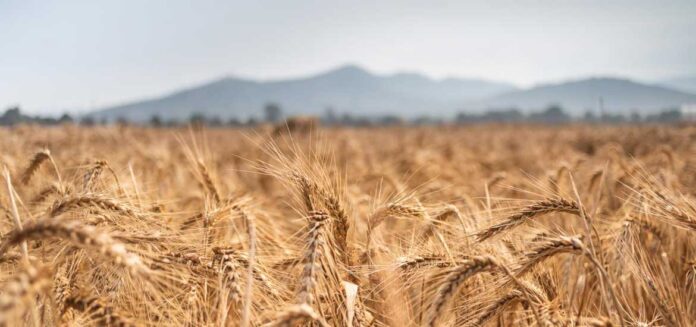
Prime Minister Abiy Ahmed announced that Ethiopia’s intensive efforts to ensure food sovereignty have reached a new milestone. Following a field visit to the North Shewa Zone of the Oromia Region, the Prime Minister stated that the country’s strategic movement to eliminate its long-standing dependence on foreign grain is yielding results.
The primary focus of the visit was a massive 2,150-hectare wheat cluster developed in the Sululta District. This expansive development zone serves as a practical demonstration of the “Ethiopia Produces” (Ethiopia Tamirt) agricultural philosophy, which aims to ensure sustainable food security by utilizing the country’s vast arable land and diverse climates.
For decades, Ethiopia was a major recipient of food aid and a heavy importer of wheat. However, the current food sovereignty campaign marks a strategic shift toward import substitution. By strengthening domestic production, the government aims to save billions in foreign currency previously spent on purchasing grain from abroad.
In a message shared on his social media pages, Prime Minister Abiy stated, “Today, we visited a lush wheat farm in the North Shewa Zone.” He noted that the initiative to strengthen national food self-sufficiency is showing “significant progress,” with encouraging results being observed across various regions.
The success seen in Sululta is part of a national strategy that enables smallholder farmers to pool their land and resources to easily access mechanization, improved seed varieties, and modern irrigation technologies. By transitioning from traditional, rain-fed agriculture to organized and large-scale productivity, the agricultural sector has seen a substantial increase in yield per hectare.
Government data indicates that the expansion of Summer irrigation wheat, combined with regular highland wheat production, is moving Ethiopia toward its goal of becoming a white wheat exporter. Beyond ensuring food security, this transformation is a crucial component of macroeconomic reforms aimed at stabilizing local prices and protecting the economy from the volatility of international commodity markets.
As the harvest season approaches in various parts of the country, the Ministry of Agriculture remains optimistic about meeting its annual production targets. The intensification of efforts in areas like North Shewa demonstrates the government’s commitment to providing essential agricultural infrastructure, such as rural roads and storage facilities.