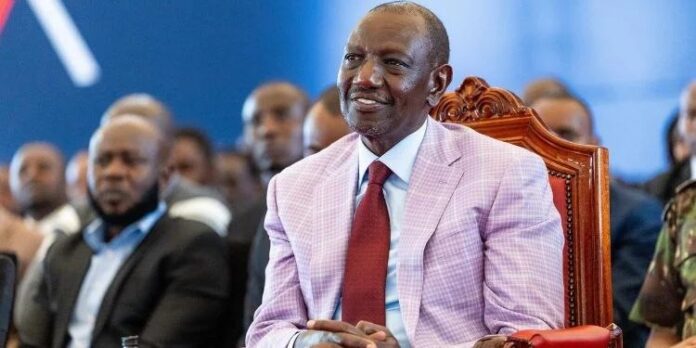
President William Ruto has unveiled Kenya’s Vision 2060 blueprint, establishing a comprehensive and ambitious long-term development strategy designed to direct the nation’s economic, structural, and social trajectory over the next three decades. Delivering a Special National Address from State House in Nairobi, President Ruto emphasized that this new framework must transcend routine political divisions, narrow partisan interests, and short-term election cycles to forge an unbreakable, unified foundation for the country’s collective future.
The announcement marks a critical turning point in Kenya’s national planning history, signaling a deliberate shift toward generational thinking, institutional resilience, and sustained economic expansion that can withstand shifts in political leadership.
The launch of the proposed Vision 2060 framework coincides strategically with the final phase of Kenya’s current long-term roadmap, Vision 2030. Initiated in 2008, Vision 2030 was structured to overhaul Kenya’s economic architecture and transform the nation into a newly industrializing, middle-income country through targeted pillars focused on economic development, social progress, and robust political governance.
While acknowledging that the legacy blueprint fundamentally reshaped national planning, long-term investment coordination, and public policy formulation over the past eighteen years, President Ruto candidly admitted that several core aspirations remain unfulfilled. Specifically, he noted that the original target of elevating Kenya securely into an upper-middle-income economy by 2030 has faced formidable structural setbacks, external economic shocks, and implementation hurdles, leaving the nation slightly short of its initial high benchmarks.
Rather than framing these shortfalls as institutional failures, the administration is leveraging the transition to Vision 2060 as a vital opportunity for deep national reflection, policy correction, and renewed momentum. President Ruto formally invited citizens across all sectors of society, including academia, the private sector, civil society, and grassroots communities, to engage in what he described as the most consequential public discourse since the adoption of the 2010 Constitution.
This inclusive, broad-based dialogue is engineered to cultivate a bipartisan, enduring national development charter that successive governments can faithfully maintain, ensuring that critical economic projects and social welfare programs are insulated from the disruptive swings of competitive electoral politics.
The preliminary architectural framework for Vision 2060 focuses heavily on accelerating structural transformation through enhanced domestic industrialization, robust public-private infrastructure development, rapidly expanded digital ecosystems, and aggressive, youth-centric job creation. Building upon recent macroeconomic stabilization efforts—such as rebuilding depleted foreign exchange reserves, successfully easing inflationary pressures, and stabilizing sovereign debt metrics—the blueprint targets a definitive, long-term leap from a developing regional economy to a globally competitive, industrialized status within a single generation.
Economists and policy analysts have noted that anchoring future growth in technology, green energy transition, and value-addition manufacturing will be essential to meeting these elevated thirty-year benchmarks. To jumpstart this massive undertaking, State House has announced that formal public participation and nationwide stakeholder consultations for the post-Vision 2030 framework will officially commence on August 12.