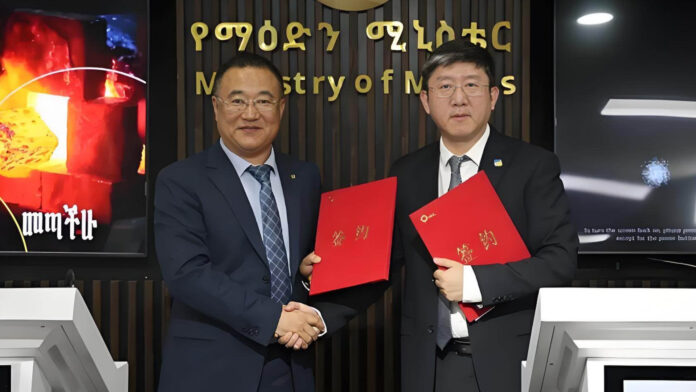
Ethiopia has taken another step toward expanding its natural gas industry after GCL Energy Investment Ethiopia Branch and China’s Jurong Group Holdings Co., Ltd. signed an agreement for the construction and toll processing of liquefied natural gas (LNG), advancing plans to develop the country’s gas resources and strengthen potential regional energy trade.
The agreement, signed in the presence of Mines Minister Alemtsehay Paulos, marks a new stage in cooperation between the two Chinese companies, which are seeking to expand natural gas liquefaction capacity and develop supporting infrastructure around Ethiopia’s Ogaden Basin gas fields.
The contract was signed by Fu Zhidong, executive president of the Ethiopia Regional Liquefaction and Refining Business Division of GCL Africa Industrial Group, and Yi Min, vice president of Jurong Group. Senior officials from Ethiopia’s Ministry of Mines and representatives of GCL Africa Industrial Group attended the ceremony.
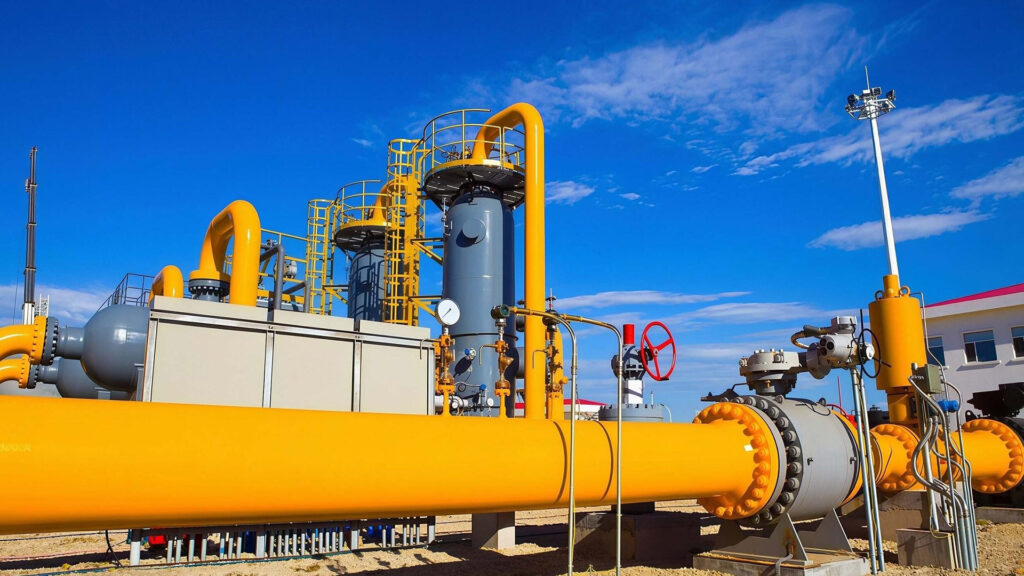
The deal is intended to advance the second phase of Ethiopia’s LNG development, beginning with the construction of its first module. However, the companies have not publicly disclosed the contract value, the module’s production capacity, its financing arrangements or a detailed construction and commissioning schedule.
Minister Alemtsehay welcomed Jurong Group’s participation in the development of GCL’s Ogaden Basin oil and gas project, describing GCL as a long-standing strategic partner of the Ethiopian government and the Ministry of Mines.
She called on the companies to use the agreement to launch construction of the first module of LNG Phase II promptly and work toward early commissioning.
The minister also invited Chinese investors to expand their involvement in Ethiopia’s mining and energy sectors, saying the country has significant natural resource potential. She pledged continued policy support and institutional assistance from the Ministry of Mines to facilitate investment and project implementation.
The agreement comes as Ethiopia seeks to translate its natural gas reserves into commercially viable production, industrial applications and broader economic opportunities. The development of domestic gas resources could help diversify the country’s energy mix, support industrial activity and create opportunities for employment and infrastructure investment.
GCL has been involved in Ethiopia’s natural gas exploration and development for several years, with the Ogaden Basin serving as a central focus of its operations.
According to information provided by the companies, the first phase of the LNG project is located at Calub in the Ogaden Basin in eastern Ethiopia. Construction began in July 2024, and the project was reported to have entered operation on October 2, 2025.
The first-phase facility was designed to process 200,000 cubic metres of natural gas per day and produce 50,000 tonnes of LNG annually. These figures represent the facility’s stated design capacity rather than a confirmation of its actual production, sales or operating performance.
The new agreement is expected to build on this initial development by expanding liquefaction infrastructure and strengthening the chain linking gas extraction with processing, storage, transportation and end-user markets.
Wang Dong, executive president of GCL Group and president of GCL Africa Industrial Group, briefed Ethiopian officials on the company’s progress in natural gas development, production capacity and LNG applications in the country.
He said the agreement with Jurong would accelerate engineering and construction activities connected to the Calub gas field and support GCL’s efforts to expand LNG production capacity, develop domestic markets and explore international export channels.
Wang also conveyed the company’s appreciation for the Ethiopian government’s continued support for its oil and gas exploration and development activities.
GCL said the project would be pursued in accordance with applicable laws and regulations, with an emphasis on local employment, improved livelihoods and green and low-carbon development. The company also outlined its ambition to establish an integrated natural gas industrial chain covering extraction, liquefaction, storage, transportation and utilization.
Jurong Group is expected to contribute expertise in natural gas liquefaction, project management, storage, transportation and international trade.
Its chairman, Lin Rongsheng, said the company would work closely with GCL to advance the project and improve supporting infrastructure and logistics systems.
He said the cooperation would combine the companies’ respective capabilities to support the development of a more integrated natural gas industry in Ethiopia.
The arrangement could be important because expanding gas production requires more than the installation of liquefaction equipment. Reliable transportation, storage capacity, distribution infrastructure and sufficient demand from industrial and other consumers are also needed to ensure that additional production reaches markets.
The companies signed a strategic cooperation framework agreement in May, according to the project information provided. The latest contract advances their cooperation toward construction and toll processing, although the relationship between the earlier framework and the various construction phases requires further clarification.
The terms of the toll-processing arrangement have not been fully disclosed. Details concerning processing fees, operating responsibilities, ownership of the gas and finished products, and the allocation of project costs remain unavailable in the public information provided.
These details will be important in assessing the project’s commercial structure and the distribution of financial and operational responsibilities between the companies.
The project could create opportunities for Ethiopia to expand the use of natural gas in domestic industries and, subject to infrastructure development and commercial agreements, explore wider regional markets.
For the Horn of Africa, stronger energy infrastructure could support industrial development and potentially create new opportunities for cross-border trade. However, the extent of these benefits will depend on production volumes, competitive pricing, transportation arrangements, demand and the availability of suitable export infrastructure.
The development of an integrated gas industry will also require coordination between production facilities and end users. Industrial consumers need clarity on delivery schedules, supply reliability, prices and payment arrangements before making investments in gas-receiving equipment or converting existing operations to natural gas.
Transport-related applications could provide another potential market. Project information cited a June 2026 report by China Daily stating that a modified bus associated with GCL Africa Industrial Group’s Ethiopian gas-to-transport initiative completed a road test on May 12. The development indicates an effort to explore natural gas use in transport, although wider adoption would require suitable refuelling facilities, vehicle availability and a reliable supply network.
The pace of the LNG expansion will therefore depend not only on construction but also on the development of distribution systems and the establishment of a commercially sustainable customer base.
The next milestones will include further disclosure of the second-phase module’s capacity, financing, construction schedule and operating arrangements, alongside evidence that expanded production can be delivered reliably to domestic consumers and, potentially, regional markets.