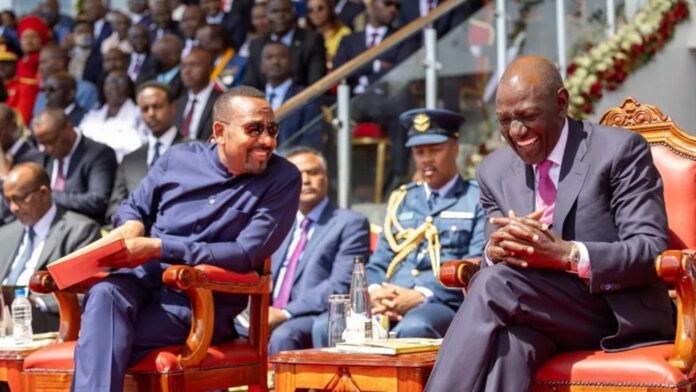
Kenya is targeting December for the commencement of crude oil exports from the South Lokichar Basin in Turkana County. The landmark development, announced by President William Ruto during his Mashujaa Day address at the Kipchoge Keino Stadium in Eldoret, potentially opens a crucial new revenue stream for the East African nation.
The announcement arrives more than 14 years after British firm Tullow Oil and its joint venture partner Africa Oil first struck commercial-grade petroleum at the Ngamia-1 well in March 2012. However, while the project promises to bolster foreign exchange earnings, officials and industry experts caution that domestic crude exports will provide no immediate relief to Kenyan consumers grappling with record-high fuel prices at the pump.
The road to commercial production in the Lokichar Basin has been beset by technical, financial, and infrastructural hurdles. Early efforts under the Early Oil Pilot Scheme (EOPS) in 2019 saw small volumes of crude transported via trucks to the port of Mombasa. However, the pilot model proved economically and logistically unsustainable for full-scale commercialization, particularly due to severe weather risks, road degradation, and high transport costs.
Further complexities stem from the physical composition of Turkana crude itself. The oil possesses a exceptionally high wax content, causing it to solidify at ambient temperatures below 40°C. Maintaining fluid flow requires heated pipelines and specialized handling facilities—an infrastructure investment requiring billions of dollars. Disagreements over land rights, community compensation, and fiscal revenue-sharing frameworks between national authorities, county leaders, and local residents added further delays.
The project gained fresh momentum following the approval of its updated Field Development Plan (FDP) and the acquisition of former Tullow assets by Gulf Energy. Under the new operational framework, initial production targets are pegged at approximately 20,000 barrels per day (bpd), with plans to scale operations progressively as processing facilities mature.
Despite the celebratory nature of the announcement, government analysts emphasize that selling unrefined crude on global markets does not translate to cheaper petrol, diesel, or kerosene domestically.
Kenya currently lacks domestic refining capacity following the decommissioning of the old Mombasa refinery. Consequently, the country remains entirely dependent on imported refined petroleum products. Local fuel costs are governed by global landing costs, foreign exchange fluctuations, and regulatory pricing structures set by the Energy and Petroleum Regulatory Authority (EPRA).
The regulator attributed the steep adjustments to volatile Middle East supply routes and higher international landing costs. Because crude exported from Turkana will be sold into international spot markets to earn hard currency, domestic distributors will continue purchasing finished products at global market rates.
To address long-term energy independence, the government is backing strategic infrastructure projects, including the proposed Dangote East Africa Refinery in Lamu. Designed with a capacity to process up to 700,000 barrels per day, the facility aims to supply Kenya and neighboring regional markets. However, because initial Turkana production will meet only a small fraction of that processing capacity, the refinery will rely heavily on supplementary crude imports from international markets.
At the community level in Turkana, expectations remain high. The local administration is finalizing negotiations with Gulf Energy and validating regulations under the county’s Local Content Act, 2024 to govern employment distribution, local procurement contracts, and revenue sharing. Concurrently, national authorities are rolling out compensation programs totaling Sh200 million for roughly 3,600 households impacted by oilfield developments.