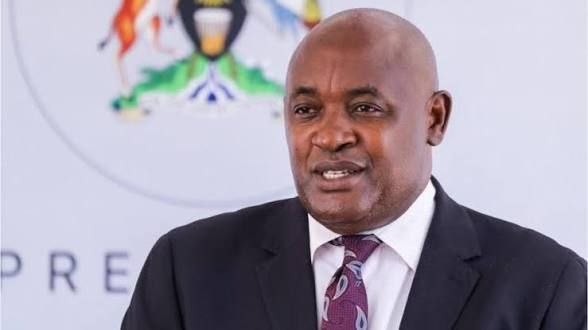
Uganda has officially brought its 2026 Ebola outbreak to a close following months of intensive public health measures, surveillance, and medical intervention. Health Minister Dr. Chris Baryomunsi made the formal announcement during a media briefing at the Uganda Media Centre on Tuesday, declaring the nation completely Ebola-free after completing the mandatory 42-day monitoring period with zero new infections.
“The Ministry of Health is pleased to announce that Uganda has officially declared the end of the 2026 Ebola disease outbreak. So today, as we speak now, Uganda is Ebola-free,” Baryomunsi stated.
The successful containment timeline was anchored to the discharge date of the final domestic patient on June 16, 2026. Health authorities measured the 42-day post-clearance countdown from this date, ensuring all transmission chains for locally acquired infections had expired.
Addressing the status of a subsequent patient discharged on July 16, 2026, at Mulago National Referral Hospital in Kampala, Dr. Baryomunsi explained that this individual was a Congolese national whose case was classified as an isolated importation. The patient had entered the country hidden inside a cargo truck and had no known local contacts, prompting officials to base their primary epidemiological countdown on the last domestic case.
“I must hasten to add that we are counting from the last Ugandan national who was discharged because the last case that was discharged was a Congolese national who came hiding in a cargo truck. He had no contacts at all,” the minister noted.
Tracing efforts confirmed that the outbreak originated from a documented importation event linked to the neighboring Democratic Republic of the Congo. Rapid case management, digital contact tracing, and strict epidemiological linking ensured that all confirmed cases were accounted for, while every identified contact successfully completed the required 21-day clinical monitoring window without developing symptoms.
Dr. Baryomunsi credited the successful containment to robust national preparedness, advanced diagnostic tools, and swift coordinated action by medical personnel across the country. In concluding the briefing, he urged the public to maintain baseline health vigilance, reassuring regional and international partners that Uganda’s health systems remain fully equipped to handle future public health eventualities.