The Kenya Ports Authority (KPA) has secured a significant endorsement for its strategic vision to position the Port of Lamu as a premier East African maritime gateway, following a formal commitment from the Kenya Ships Agents Association (KSAA). During a high-level familiarisation tour of the port and ongoing Lamu Port-South Sudan-Ethiopia Transport (LAPSSET) infrastructure, KSAA delegates pledged to actively collaborate with the Authority in marketing the deep-water facility to international shipping lines.
This strategic partnership aims to leverage the impending finalisation of vital regional transport arteries, most notably the 453-kilometre Lamu-Garissa Road, to fundamentally transform supply chain dynamics and international trade corridors across the Horn of Africa.
Once completed, the Lamu-Garissa highway is projected to streamline cargo mobility by establishing a robust transport link connecting the port directly to Kenya’s domestic hinterland as well as landlocked economies including Ethiopia and South Sudan. KSAA Chairman Roger Dainty noted that the finalisation of this critical infrastructure will substantially enhance Lamu’s competitive edge by optimizing cargo evacuation timelines and mitigating operational overheads for maritime operators.
Highlighting the broader commercial implications, Dainty affirmed that the improved connectivity will foster institutional confidence among global shipping lines, ultimately driving higher cargo volumes and cementing Lamu’s stature as a vital trade conduit for Eastern and Central Africa.
To spearhead these initiatives, the KSAA delegation—representing the principal commercial clients of the port—engaged extensively with a senior KPA leadership team acting on behalf of Managing Director Captain William Ruto. The KPA administration outlined a comprehensive, long-term operational framework centered on building enduring alliances with international port operators, institutional investors, and global logistics providers.
Officials emphasized that ongoing investments within the LAPSSET Corridor are systematically enhancing Lamu’s capacity to function as an emerging regional transshipment and logistics hub capable of meeting evolving international trade demands.
While acknowledging the government’s substantial capital injection of approximately Sh40 billion toward the development of the initial three berths of the planned 23-berth complex, industry executives underscored the necessity of accelerating complementary infrastructure rollouts.
KSAA Chief Executive Officer Elijah Mbaru stressed that maximizing the port’s utility requires targeted enhancements, including expanded quay and container yard equipment, fully synchronized digital documentation processes across regional ports, and the establishment of auxiliary warehousing facilities. Furthermore, industry stakeholders noted that completing auxiliary rail connections, residential support zones, and reinforced navigational aids will be essential to accommodate larger vessels and facilitate seamless through bills of lading.
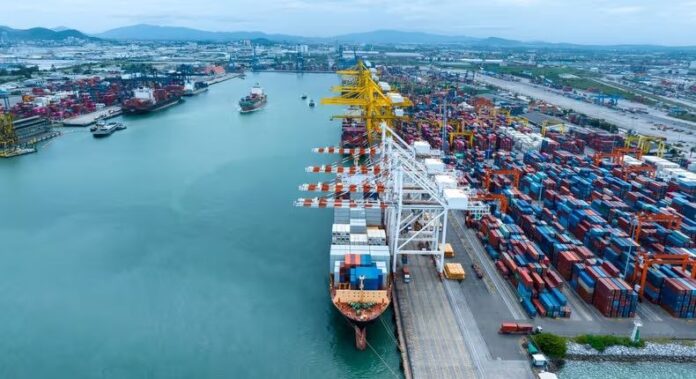
Lamu Port possesses inherent geographical and structural advantages that distinguish it from traditional regional competitors, including a natural depth of 17.5 metres and 400-metre berths capable of accommodating modern Post-Panamax vessels carrying up to 12,000 twenty-foot equivalent units (TEUs).
Its strategic proximity to open ocean shipping lanes positions the facility to capture substantial transshipment traffic destined for East Africa and the Middle East. Ultimately, maritime analysts agree that realizing Lamu’s full economic potential remains intrinsically linked to the progressive realization of the broader $24.5 billion LAPSSET Corridor, establishing an integrated multimodal trade network across the region.