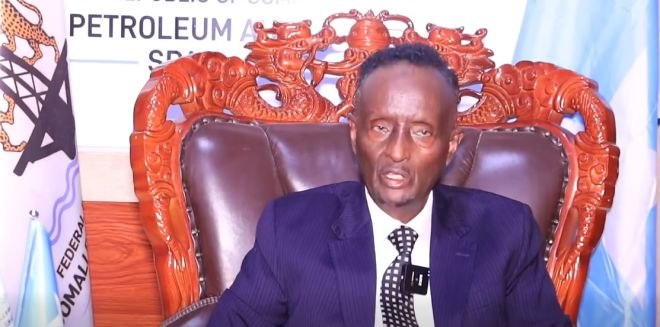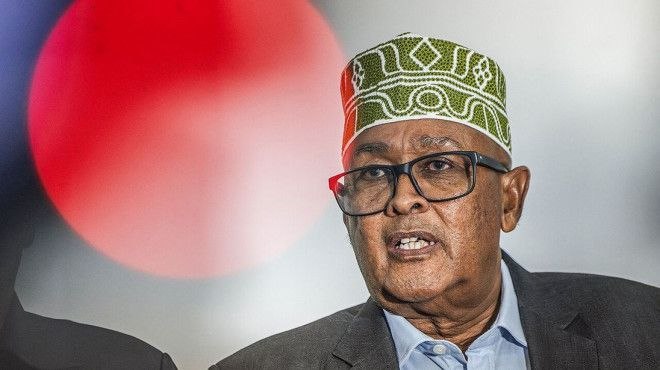
Somaliland President Abdirahman Mohamed Abdullahi Irro has outlined an ambitious geopolitical strategy aimed at transforming his self-declared republic into a premier commercial hub and strategic security anchor along the Red Sea and Gulf of Aden. Speaking during an official visit to Nairobi, Irro indicated that Somaliland intends to adopt an economic and security model similar to neighboring Djibouti by leveraging its vast coastline to offer military installations to foreign powers while rapidly scaling operations at the key port of Berbera.
The initiative represents a major diplomatic push by Hargeisa to convert its prime geographic positioning into sovereign recognition and sustained foreign investment. Under President Irro’s administration, Somaliland is positioning itself as an indispensable regional security partner in exchange for formal political ties, strategic defense alliances, and direct trade integration.
“Our message is that we are a responsible partner,” Irro stated in an interview, highlighting the critical shipping lanes traversing the Gulf of Aden. He emphasized that the port of Berbera—which has undergone extensive modernization led by Dubai-based logistics giant DP World—is uniquely situated to serve as a vital maritime gateway for landlocked Ethiopia and the surrounding Horn of Africa.
Somaliland’s strategic vision directly mirrors Djibouti’s national economic blueprint. Over recent decades, Djibouti successfully monetized its coastal location by hosting major foreign defense installations—including bases for the United States, China, France, and Japan—while serving as the main import-export hub for Ethiopian commerce.
Aiming to replicate that leverage, President Irro expressed an explicit willingness to host international forces on Somaliland soil. Specifically, he noted that his government remains open to negotiating defense facilities with both the United States and Israel should either country seek a strategic footprint in the region.
“There is no Israeli or American presence yet,” Irro clarified, dispelling rumors that foreign facilities had already been built in Berbera. However, he reaffirmed Hargeisa’s readiness to negotiate, noting, “If they are interested.”
This diplomatic offensive arrives at a pivotal moment. Speculation surrounding defense and intelligence cooperation in the Gulf of Aden surged following Israel’s formal recognition of Somaliland in December. Meanwhile, President Irro is preparing for a high-stakes visit to Washington next month, where he hopes to meet with U.S. President Donald Trump. A White House meeting would make Irro the first sitting Somaliland president to engage directly with a U.S. head of state. Irro voiced strong optimism regarding future diplomatic breakthroughs, stating that Somaliland anticipates formal recognition from the United States and at least one other nation before the end of the year.
Nevertheless, the approach introduces substantial geopolitical friction across the Horn of Africa. The Federal Government of Somalia, which regards Somaliland as part of its sovereign territory, firmly opposes Hargeisa’s external security agreements. While Irro accused Somalia of deploying forces near Somaliland’s southern border, Mogadishu insists that any foreign maritime leases violate national sovereignty.
Concurrently, Yemen’s Houthi movement has warned it will attack any Israeli military installations in Somaliland, raising concerns about regional spillover. Meanwhile, Turkish-led mediation efforts in Ankara and Istanbul have yet to deliver a settlement between Mogadishu and Hargeisa. Despite rising tensions, Irro reaffirmed Somaliland’s resolve to utilize its coastal assets to overcome its long-standing diplomatic isolation, concluding, “There is nothing free in the world.”