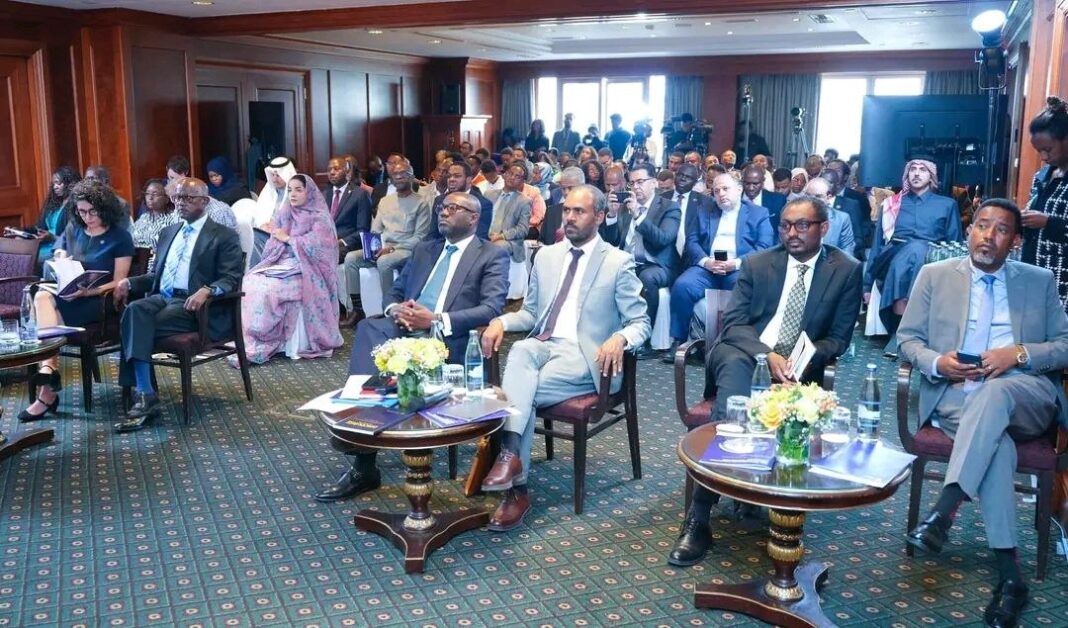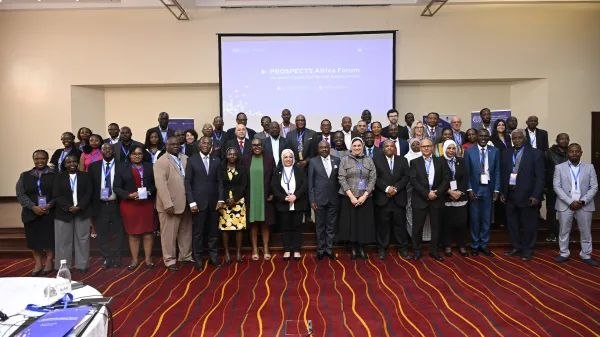
The International Labour Organization (ILO) has officially inaugurated the PROSPECTS Africa Forum on Decent Work and Forced Displacement in Nairobi, Kenya, bringing together tripartite delegations, regional institutions, and international development partners to advance policy action for employment creation in displacement-affected contexts. Running from July 21 to 23, 2026, the high-level gathering convenes key representatives from governments, employers’ organizations, and workers’ unions across Egypt, Ethiopia, Kenya, Sudan, and Uganda.
Furthermore, vital regional bodies—including the East African Community (EAC), the Intergovernmental Authority on Development (IGAD), and the Southern African Development Community (SADC)—are actively participating to foster cross-border cooperation and institutional alignment.
This regional summit unfolds as the second phase of the PROSPECTS programme, spanning 2024 to 2027, pivots toward enhanced policy coherence, system-level reform, and the long-term sustainability of results. As protracted displacement crises continue to impact the African continent, stakeholders are intentionally moving beyond traditional short-term humanitarian relief models.
Instead , the programme champions a development-oriented approach that integrates refugees and host communities into formal economic frameworks, utilizing inclusive labor market policies and social dialogue mechanisms to secure durable solutions.
Opening the dialogue, Caroline Mugalla, Director of the ILO Country Office for Tanzania, Burundi, Kenya, Rwanda, and Uganda, emphasized the critical necessity of uniting governments and social partners to exchange experiential insights and formulate practical policy priorities. The opening plenary and subsequent high-level panels featured prominent figures such as Shadrack M. Mwadime, Principal Secretary for Kenya’s State Department for Labour and Skills Development, and Dr. Coffi Agossou, ILO Deputy Regional Director for Africa.
Highlighting the core mission of the initiative, Dr. Agossou noted that the collective ambition must center on generating more productive and decent jobs, reinforcing inclusive labor market institutions, and delivering enduring policy solutions.
Throughout the multi-day event, participants are examining several foundational pillars necessary for robust economic integration, including skills development systems responsive to labor market demands, the validation of prior learning, and targeted work-based training. Discussions are also evaluating the evolving landscape of digital technologies and artificial intelligence, alongside the regulatory and social protection measures required to guarantee fair employment standards. Additionally, social protection is being addressed as a key enabler of economic inclusion, equipping vulnerable populations to mitigate risks and stabilize their livelihoods.
To translate regional insights into measurable national impact, tripartite delegations are actively engaging in structured country policy laboratories designed to isolate priority employment challenges and outline pragmatic policy pathways. These sessions enable national teams to establish institutional responsibilities, assess implementation feasibility, and outline concrete actions to be executed within 100 days.