Ethiopia has called for stronger regional cooperation, scientific decision-making and hydro-diplomacy in the management of shared water resources, while Egyptian President Abdel Fattah El-Sisi has warned that Cairo would not accept any fait accompli that threatens its water security, underscoring continuing differences between the two countries over the Nile River.
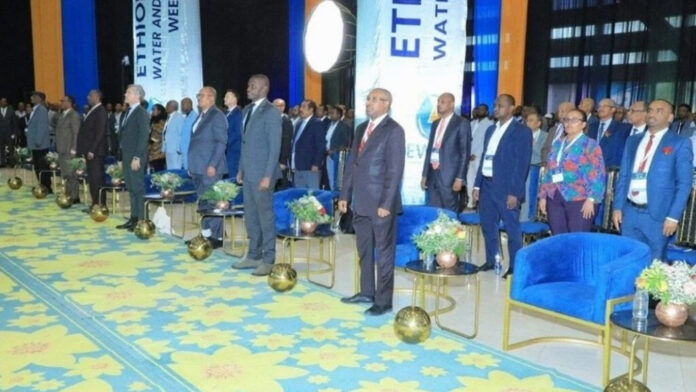
The contrasting positions emerged as Ethiopia’s third Water and Energy Week opened on October 26, 2026, and El-Sisi addressed the ninth Cairo Water Week on October 25. Although both countries emphasized the importance of cooperation among Nile Basin states, their statements reflected persistent disagreements over how the river’s resources should be managed and how development projects should account for the interests of downstream countries.
In a message delivered on behalf of Water and Energy Minister Habtamu Itefa, Ethiopia’s Ministry of Water and Energy called for constructive engagement, reliable information-sharing and practical cooperation among countries that share rivers.
According to the Ethiopian News Agency (ENA), the ministry described hydro-diplomacy as a means of promoting regional integration and urged countries to use science-based policymaking to turn shared water challenges into opportunities for development and stability.
The ministry also highlighted Ethiopia’s water resources and renewable energy potential, emphasizing the need for effective resource management, institutional coordination and sustainable investment. Its priorities include expanding access to affordable electricity, improving water supply and sanitation, strengthening irrigation systems and increasing water-use efficiency.
It further called for stronger hydrological and meteorological monitoring, improved basin information systems and greater collaboration among governments, researchers, investors and development partners to support decisions concerning shared water resources.
Speaking at the opening of Cairo Water Week on October 25, El-Sisi stressed the Nile’s central importance to Egypt, saying the river accounts for more than 98 percent of the country’s renewable water resources.
The Egyptian president said Cairo respected the right of Nile Basin countries to pursue development and supported cooperation in sectors including energy, agriculture and irrigation. He also expressed interest in strengthening cooperation in the Eastern Nile Basin, particularly among Egypt, Sudan and Ethiopia.
However, El-Sisi maintained that development should not come at the expense of another country’s water security.
“Any wager that Egypt will accept a fait accompli or compromise its water security is a losing wager,” he said.
He identified prior notification, the exchange of studies and consultation as practical measures for building trust and protecting the interests of countries sharing water resources. He also reiterated Egypt’s stated commitment to cooperation based on international law, coordination, good neighbourliness and the principle of avoiding harm to other countries.
The remarks reflect Cairo’s longstanding concerns over the Grand Ethiopian Renaissance Dam (GERD), Ethiopia’s flagship hydropower project on the Blue Nile. Ethiopia officially inaugurated the dam in September 2025, presenting it as a major source of electricity generation intended to support domestic development and expand regional power supplies.
Egypt and Sudan have repeatedly raised concerns about the dam’s implications for downstream water security. Years of negotiations among the three countries have yet to produce a binding agreement governing the dam’s filling and operation.
Ethiopia, for its part, has maintained that the GERD is designed to generate electricity and support economic growth without causing significant harm to downstream countries. The dispute has centred on how the dam should be operated during periods of drought, the sharing of information and the establishment of arrangements that the three countries consider acceptable.
Egypt has continued to emphasize prior consultation and impact assessments in discussions about Nile Basin projects. In September 2026, Egyptian Minister of Water Resources and Irrigation Hani Sewilam said Cairo had agreed to support South Sudan’s planned Grand Fula Dam after reviewing technical studies and participating in consultations.
The project was among 36 initiatives submitted under the Nile Basin Initiative’s investment programme, according to Sewilam. He said Egypt had exchanged information, assessed potential impacts and participated in consultations before agreeing to support the project.
Egypt has cited such procedures as an example of how information-sharing and consultation can help countries advance water infrastructure projects while addressing concerns about their potential effects.
However, Ethiopia’s position on the GERD has remained a central point of disagreement, with Addis Ababa emphasizing its right to development and Cairo demanding assurances over the management of a river on which it depends heavily.
Despite their different emphases, the statements from Addis Ababa and Cairo indicate that both governments continue to present cooperation as necessary for managing shared water resources. Ethiopia has stressed integrated planning, scientific evidence and regional development, while Egypt has focused on consultation and safeguards for its water security.
Neither statement signals a breakthrough in the GERD dispute. The central challenge remains finding arrangements that reconcile Ethiopia’s development priorities with Egypt’s concerns over downstream water supplies, while also addressing Sudan’s interests.
Ethiopia’s Water and Energy Week, running from October 26 to 30, is expected to generate policy recommendations, partnerships and investment proposals for the country’s water and energy sectors. Cairo Water Week, held under the theme “Water as a Catalyst for Peace, Shared Prosperity and a Sustainable Planet,” is bringing together participants to discuss water security, capacity-building and preparations for the 2026 United Nations Water Conference, scheduled for December in the United Arab Emirates.