A catastrophic convergence of war, economic collapse, and severe environmental drought is threatening to completely destroy Sudan’s 2026 rainfed crop season. The growing agricultural failure dramatically heightens the risk of widespread famine across a nation already shattered by more than three years of brutal civil war, threatening millions of lives reliant on the impending harvest.
In Gedaref state, long regarded as Sudan’s premier grain producer and the agricultural spine of the country, farmers report that prolonged dry spells have left the soil cracked, uncultivable, and barren nearly two months into the critical rainy season. The rainfed sectors in eastern and central Sudan normally produce the vast majority of the nation’s staple foods, particularly sorghum and sesame. Without predictable rainfall, the entire seasonal cycle has collapsed.
Osman Abakar, a farmer in southern Gedaref, reported that the delay in rains has completely upended local farming schedules. He noted that even if rain falls later in the season, total crop yields will still be severely impacted. Agricultural experts echo this concern, warning that when rains are delayed, late-planted crops suffer acute heat stress and become far more vulnerable to destructive pest infestations. For millions of subsistence farmers who depend entirely on seasonal precipitation rather than complex irrigation systems, a missed planting window translates directly to total yield failure.
The environmental crisis is particularly acute in the war-torn regions of Darfur and Kordofan, where persistent fighting between the Sudanese Armed Forces and the paramilitary Rapid Support Forces has disrupted rural life for years.
Mass displacement has forced millions of agricultural workers off their ancestral lands, leaving vast stretches of fertile territory unplanted and unharvested. The combination of active warfare, destroyed infrastructure, and unseasonable drought has effectively rendered large swathes of the country’s most vulnerable food-producing regions non-functional.
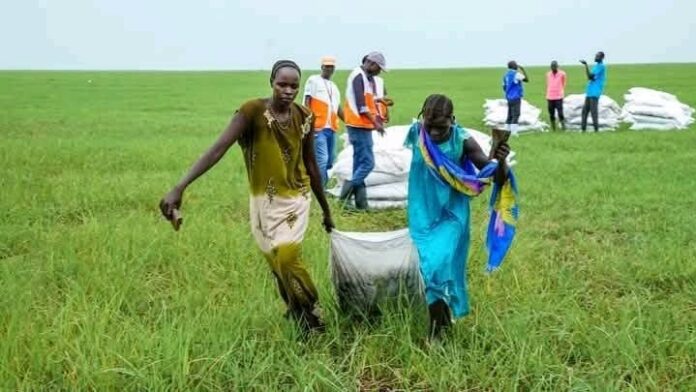
Local humanitarian activists warn that the failure of the 2026 harvest will drastically worsen an already catastrophic starvation crisis. Active frontlines and military blockades continue to choke key trade routes, preventing food from moving from surplus areas to communities on the brink of starvation. The immediate economic impact is being felt acutely in local markets, where food prices have skyrocketed.
A single bag of staple sorghum has jumped from approximately 110,000 to nearly 170,000 Sudanese pounds in recent weeks, representing an increase of over 50 percent. This rapid inflation leaves millions of displaced families completely unable to afford basic nutrition, even where small amounts of food remain available.
Compounding the rainfall shortage, water levels along the vital Nile River have experienced noticeable drops, hampering downstream irrigation efforts. Former officials from Sudan’s Ministry of Water Resources attribute the reduced flow to uncoordinated water management and operations at Ethiopia’s Grand Ethiopian Renaissance Dam.
Because the internal conflict in Sudan has severely disrupted bilateral technical communication and diplomatic channels between Khartoum and Addis Ababa, shared water management protocols have broken down, leaving Sudanese agricultural projects along the river basin vulnerable to unannounced fluctuations in water availability.
Despite the overall bleak trajectory, heavy downpours reported across portions of eastern Sudan late Friday offered a brief glimmer of hope to desperate farmers. While these late rains may allow some producers to salvage remaining crop cycles, experts caution that isolated storms cannot reverse months of systemic moisture deficits or fix the broader structural collapse caused by ongoing warfare.