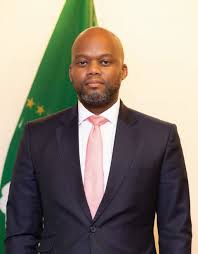
Wamkele Mene, the Secretary-General of the African Continental Free Trade Area (AfCFTA), stated that Africa’s greatest development challenge today is not a lack of strategy, but rather the inability to transform strategies into practical, operational projects. The Secretary-General made these remarks during a recent high-level summit of policymakers and development partners held in Freetown, the capital of Sierra Leone.
According to the Secretary-General, Africa has achieved significant success in designing numerous excellent policies and frameworks. However, these documents often remain confined to office shelves, hindering the continent’s efforts to eradicate poverty and boost trade. “The real challenge lies in implementation,” Mene emphasized, noting that African nations must convert their policies into projects that are attractive to private and public investment and are bankable.
Speaking at the Sierra Leone Presidential Initiative on Climate Change, Renewable Energy, and Food Security (PI-CREF), led by Dr. Kandeh Yumkella, Mene described Sierra Leone as a role model for other African nations. Sierra Leone became the first African country to complete the AfCFTA Readiness Assessment and publish it in the official gazette.
This readiness has helped the country identify its trade priorities, assess trade barriers, and clearly outline investment opportunities for the continental market. This journey, which began in October 2025 under President Julius Maada Bio, is seen as a transformative roadmap that the other 49 countries that ratified the trade agreement should follow.
Another major issue discussed at the summit was that trade cannot succeed without infrastructure and energy. In Sierra Leone, current electricity access stands at only 36%, while fewer than 1% of citizens have access to clean cooking energy. To address this, the Mission 300″ program—supported by the World Bank and the African Development Bank—aims to increase electricity access to 80% over the next five years.
Wamkele Mene noted that integrating climate-resilient agriculture and renewable energy development with trade goals is crucial for creating a new African supply chain. He cautioned that processing products is impossible without power, and without production, there are no goods to sell within the free trade area.
The greatest concern for the AfCFTA is the wide gap between the signing of the agreement and actual trade. Although most African Union member states have ratified the agreement, intra-continental trade remains low. The reasons cited for this include weak infrastructure, inconsistent regulatory systems, and the lack of established value-added supply chains.
Mene explained that global economic instability and supply chain disruptions are making Africa more vulnerable. To counter this, he urged that strengthening connections and diversifying economies is the only viable solution. Countries like Ghana are also looking closely at this call to move from policy to action to boost their export capacity and become competitive in the pharmaceutical, agricultural, and automotive sectors