For decades, the international response to Somalia’s overlapping crises has followed a familiar and exhausting pattern: emergency food aid, temporary shelters, and short-term medical support. However, as the country grapples with a “triple threat” of climate change, declining aid, and an uncertain security transition, the United Nations is sending a clear message: the era of “temporary fixes” must end.
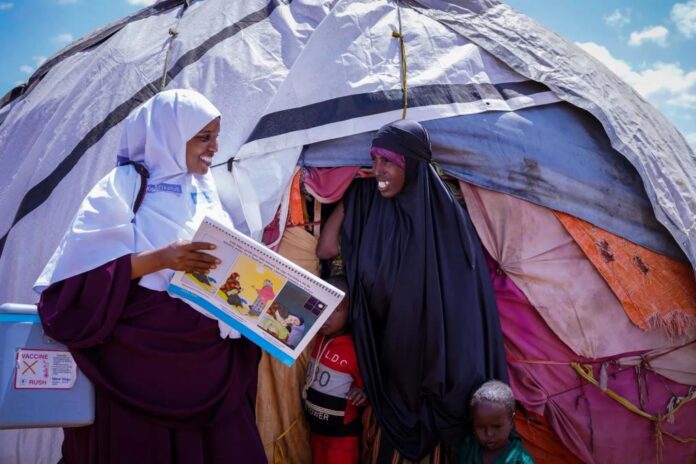
Shoko Noda, UN Assistant Secretary-General and Director of the UNDP Crisis Bureau, warned during a high-level visit to Mogadishu and Bosaso this week that Somalia’s fragile progress is at a critical juncture. With nearly five million people in need of humanitarian assistance and 3.3 million internally displaced, Noda argues that stability should not be a prerequisite for development; rather, development must be the driver of stability.
“If we wait for stability to invest in development, we risk losing both,” Noda stated. “Development is a tool that restores trust, creates jobs, and prevents crises from recurring.”
Her visit comes at a pivotal moment. As the UN prepares to wind down its political mission and Somalia assumes full responsibility for its own security, the country faces a severe funding gap. Currently, two out of three people suffer from multidimensional poverty. Although the economy is growing at about 3%, it remains insufficient to meet the needs of a population where 75% are under the age of 30.
In the port city of Bosaso, Noda observed a strategic shift that UNDP plans to scale nationwide. At the Girible displacement site, the focus has moved from temporary camps to permanent solutions. Displaced persons are gaining land tenure rights and moving into permanent housing, laying a foundation so their lives no longer depend solely on the next round of emergency aid.
This shift is also visible in the local economy. At the Fisheries Training Centre in Mogadishu and the Elman Peace Center, young Somalis—many of them displaced—are being trained in market-ready skills. From solar installations and electronics repair to plumbing and coding, the training aims to bridge the gap between humanitarian need and economic independence.
“When young people have jobs, dignity, and opportunity, the risks of conflict and displacement begin to recede,” Noda emphasized.
In 2026, UNDP plans to convene the UN Solutions Champions to Internal Displacement Group. The goal is to ensure that recovery efforts are government-led and supported by innovative financing sources rather than relying solely on volatile donor aid.
During a roundtable discussion on drought response, Noda highlighted the severe impact of climate change on water and food security. She called for significant development investment, particularly in renewable energy and disaster preparedness, to ensure that the next drought does not inevitably lead to famine.