While the economic recovery following the global pandemic has been promising, the mounting pressure of external debt is endangering development in several African nations. According to Claver Gatete, Executive Secretary of the United Nations Economic Commission for Africa (ECA) and UN Under-Secretary-General, more than 25% of total government revenue in many African countries is being diverted from essential services to cover debt payments.
Held under the theme “Enhancing g Fiscal Space and Debt Sustainability,” the forum highlighted a striking paradox: while Africa is home to twelve of the world’s fastest-growing economies, it remains the continent facing the highest cost of capital globally.
Africa currently finds itself navigating “fast-shifting global realities” characterized by a slowdown in global economic growth and persistent financial instability. Speaking at the opening of the Second African Sovereign Debt Justice Forum in Addis Ababa on May 6, 2026, Claver Gatete stated that geopolitical tensions in Eastern Europe and the Middle East have not only disrupted trade flows but also directly impacted Africa’s fiscal capacity by driving up commodity prices.
Despite these challenges, the continent’s macroeconomic foundation remains resilient. Growth reached 3.9% in 2025 and is projected to rise to 4.0% in 2026 and 4.1% in 2027—surpassing the global average. However, this “growth momentum” is under significant threat due to a debt burden estimated at approximately $1.2 trillion USD.
The human toll of this financial pressure is profound. As Gatete explained “In practical terms, this means unbuilt classrooms, clinics lacking staff and supplies, and jobs that are never created.”
He emphasized that when debt servicing consumes a major share of the budget, development is not just delayed—it is inevitably undermined. A primary focus of the Addis Ababa forum was the structural issue regarding how international markets assess African risk. Currently, 16 Africa countries are at high risk of debt distress, while 7 are already in distress.
However, experts argue these figures are inflated due to a “systemic mispricing” of risk on the continent. Today, only Mauritius and Morocco hold investment-grade credit ratings, while 19 African nations have no credit rating at all.
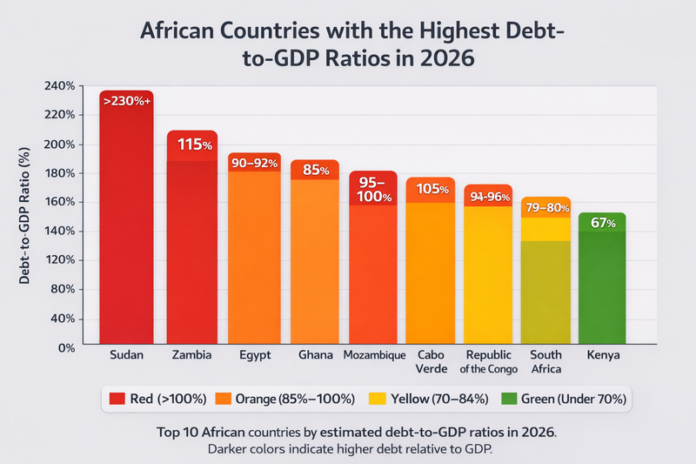
Data shows that at least 16 countries are paying debt service costs that exceed their economic capacity. This distorted perception of risk has resulted in a cumulative loss of over $74 billion USD for the continent.
To address this, the ECA is strongly advocating for a reform of the global financial architecture and the establishment of an African Credit Rating Agency that provides transparent, forward-looking, and data-driven assessments.
The “cascading shocks” hitting the global economy have exacerbated the pressure. Recent geopolitical disruptions have caused fuel prices to rise by 32% and fertilizer prices by 33.4%.
Additionally, recent currency devaluations in 30 African countries have made servicing foreign debt (denominated in dollars) even more expensive. Gatete warned that these shocks could reduce Africa’s overall growth by 0.2 percentage points, presenting an urgent challenge for debt management offices.
At the forum, co-organized by the ECA and FSD Africa, Gatete called on African nations to align their debt strategies with climate and development goals.
In contrast to the broader risks facing the continent, the host nation, Ethiopia, presented a roadmap of resilience. State Minister of Finance Semereta Sewasew detailed a comprehensive reform program launched in 2024, which includes transitioning to a market-led foreign exchange system, tightening monetary policy, and enhancing domestic revenue collection.
Notably, Ethiopia secured over $3.5 billion in debt relief under the G20 Common Framework and continues negotiations with private creditors. Ethiopia’s experience demonstrates that debt sustainability depends as much on the “credibility of policy frameworks” as it does on the volume of debt.
As Ethiopia prepares to represent the continent by hosting the COP32 Climate Summit, the stakes for Africa have never been higher. While vast financial capacity is required to meet climate goals, this capacity is currently being stifled by an inequitable international system.
“This discussion is about more than just debt,” Gatete explained. Every decision made by debt managers impacts millions of Africans, determining whether governments can protect their citizens from climate disasters and build the infrastructure necessary for a productive economy. The ECA reaffirmed its commitment to providing data-driven advisory and capacity-building support to ensure that African growth remains not only strong but sustainable.