The survival of Sudan as a sovereign state now rests entirely on the establishment of a unified and professionally led national army, according to urgent warnings from political analysts and military experts. As the country faces an unprecedented existential crisis, observers stress that without a fundamental transformation of the security sector—specifically moving away from “feudal-style” militia governance—Sudan risks falling into permanent state collapse and endless civil war.
For decades, Sudan’s security landscape has been defined by a proliferation of armed groups stemming from regional marginalization; however, the current conflict has accelerated a dangerous shift toward a “militia mindset.” In this new paradigm, power and resources are distributed through the control of local armed factions rather than through national frameworks or social justice.
One regional analyst noted that the emergence of a system where the state is defined by power-sharing among militias represents a systematic dismantling of the Sudanese state, where military might becomes the only measure of political influence, causing the concept of a unified nation to vanish.
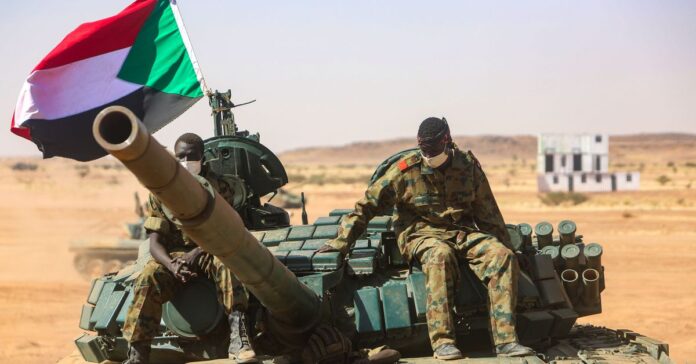
The ongoing war between the Sudanese Armed Forces (SAF) and the Rapid Support Forces (RSF) has exposed deep structural distortions within the country’s defense architecture. Experts argue that relying on paramilitary groups for internal security has created a fragile “two-headed” military structure prone to collapse.
To reverse this, civil society leaders are calling for a deep re-evaluation of the “armed struggle” narrative; while many movements began to address rural marginalization, their evolution into autonomous armed entities often replicates the very discrimination they sought to eliminate. The consensus among reformers is clear: Sudan cannot sustain multiple armies.
Lasting peace requires a monopoly of force under a single national entity, a military that reflects the country’s ethnic and regional diversity to avoid being seen as a tool for any specific group, and strict civilian oversight to ensure the military protects sovereignty rather than interfering in politics. Without these reforms, aspirations for equal citizenship and sustainable development will remain out of reach.
As small arms proliferate and regional warlords gain strength, Sudan risks following the path of “failed states” where a central government exists in name only. A former Sudanese diplomat warned that the choice is binary: either commit to building a professional national army free from tribal and political affiliations, or accept the total disintegration of the country.