In an effort to halt the war in Sudan—one of the world’s most dire humanitarian crises—the United States administration has launched a high-level diplomatic campaign aimed at bringing the warring generals back to the negotiating table. This move comes as international powers ramp up pressure for an immediate end to the conflict through various global initiatives.
Sources close to the Sudan Tribune reveal that the U.S. administration has shifted from its previous method of simply inviting parties to dialogue. It has now prepared a comprehensive negotiation process involving “decisive pressure tools” and alternative plans.
This strategy, referred to as “Plan B,” aims to provide a lasting solution to the root causes of the Sudanese crisis rather than merely offering a temporary respite from the fighting. Massad Boulos, a senior advisor to the U.S. President on Arab and African affairs, stated that the international consensus reached at a recent high-level summit in Berlin sent a clear message. Participants at that summit pledged 1.5 billion Euros for humanitarian aid while simultaneously demanding that the war stop immediately.
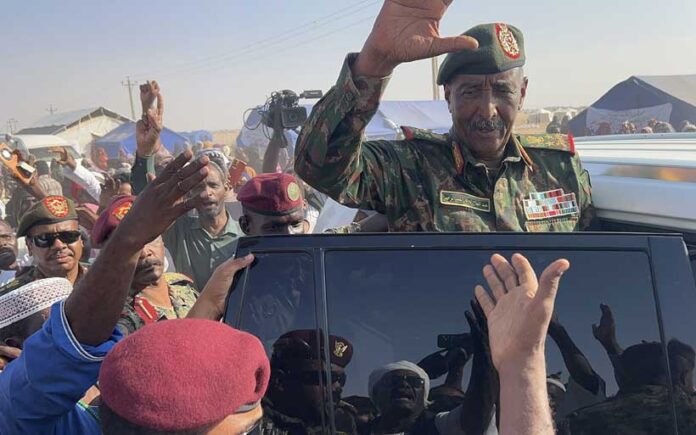
However, this diplomatic pressure faces stiff domestic defiance. Just hours before the American announcement, the leader of the Sudanese Armed Forces (SAF), Lieutenant General Abdel Fattah al-Burhan, reaffirmed his opposition to negotiating with the Rapid Support Forces (RSF). Burhan’s vow to fight until “final victory” highlights the vast gap between the diplomatic goals of the international community and the military ambitions of the two generals.
Nevertheless, political analysts argue that a military victory for either side is an “illusion.” Ismael al-Nayer, a member of the Center for International Political Relations Studies, describes the current state of the war as a “disabling balance.”
According to al-Nayer, external interventions—such as the deployment of Colombian mercenaries for the RSF and the Sudanese army’s mining partnerships with China and Turkey—have prolonged the war. This has created a stalemate where neither side can gain total dominance, yet neither side collapses.