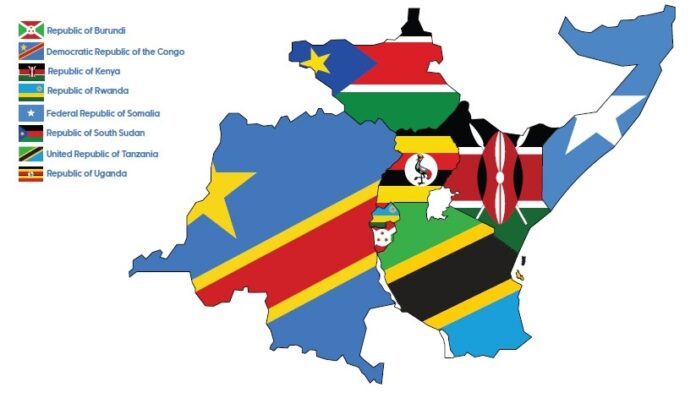
The Government of South Sudan has announced that it will officially begin national consultations regarding the proposed political confederation of the East African Community (EAC). The nationwide engagement aims to gather critical citizen feedback on the governance structure, decision-making powers, and overall architecture of the future regional confederation.
Addressing media representatives on Friday, Kawaja Kaw Madol, Undersecretary in the Ministry of East African Community Affairs, outlined the rollout plan for the public discourse. The consultations are scheduled to kick off in Juba on September 23 before expanding outward to selected regional states.
“The purpose of me calling you here is to pass this message to the people that the Republic of South Sudan is going to conduct the National Consultation on Political Confederation for the EAC,” Kaw told journalists during the press briefing.
According to the Ministry official, the public dialogue will center on several pivotal pillars concerning regional integration. Participants will examine what the organizational framework will look like in a would-be confederated East Africa and explore mechanisms for seamless cooperation among member states.
Other core areas on the agenda include decision-making protocols, the specific authority vested in the confederated leadership, as well as foundational questions regarding the constitution, governance models, and sustainable funding arrangements.
“We will discuss what the structure will look like in a would-be confederated East African community. Second is the area of cooperation. How are we going to cooperate as members of the EAC with the confederal leadership?” Kaw explained. “Then another area is decision-making. The other one is the authority of the confederated leadership.”
During these sessions, designated experts hailing from various EAC member states will directly engage citizens, seeking public opinion and formal contributions on each of the outlined discussion points.
The consultative roadmap is designed to be deeply inclusive, ensuring that diverse strata of society have a voice in shaping the country’s regional destiny. The initial phase in Juba will convene the nation’s political leadership alongside key societal groups, including civil society organizations, youth representatives, women’s associations, and academia.
Following the launch in the capital, the process will transition to the regional level. Kaw confirmed that selected states have been prioritized for physical public forums to guarantee broad geographic representation.
“We will start with Central Equatoria, then go to Jonglei, Western Bahr Ghazal, and then we will go to Lakes State. These are selected states where we are going to conduct public consultations,” Kaw noted. He added that representation and participant generation will also be arranged for the remaining states and administrative areas across the country’s ten states and three administrative zones to ensure no community is left behind.
Emphasizing the long-term significance of the initiative, the Undersecretary urged South Sudanese citizens to seize the opportunity to voice their perspectives on the country’s integration trajectory. Because South Sudan is already an active member of the bloc, officials stressed that public input is vital in determining how the East African Community evolves moving forward.
“I ask South Sudanese to take this opportunity to come out and express their opinion during the consultations because it is something that we are already part of. We need to express our opinion on what we want the East African Community to look like,” Kaw stated.