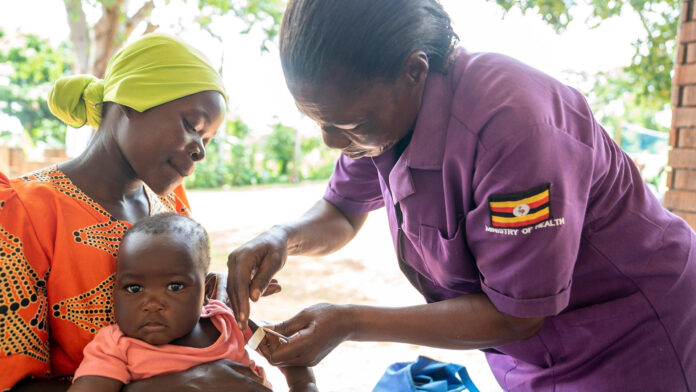
The Government of Uganda has reported that approximately 86 percent of Ugandans now live within five kilometres of a health facility, with most of these facilities owned by the government. The disclosure was made in a comprehensive essay published by the Uganda Media Centre on Friday, October 30, 2026, titled “Resilience, Progress and the Future of Uganda’s Health System.”
According to the government, this wide reach is the result of a deliberate policy decision to construct health centres across the entire country rather than concentrating them only in urban areas. “This reach results from a deliberate decision to build health centres across the country and not only in towns,” the statement read.
The essay, which provides a detailed accounting of Uganda’s health sector achievements, challenges, and future direction, noted that access to healthcare has significantly widened over the years, with public confidence in the system following suit. According to the Uganda Demographic and Health Survey, the proportion of mothers delivering in health facilities rose from 37 percent in 2001 to 42 percent in 2006, 57 percent in 2011, and 73 percent in 2016.
“Fewer women now give birth at home without skilled help, which saves the lives of mothers and newborns,” the government stated, adding that while crowded maternity wards demonstrate a system under pressure, they equally demonstrate a public that trusts it.
On the supply of essential medicines, the government reported substantial improvement, with the share of health facilities reporting no stock-out of any of the six tracer essential medicines rising from 43 percent in 2010 to 95 percent by 2019. Malaria prevalence has also been pushed back, standing below 1 percent in Kampala and under 15 percent nationwide in recent assessments. Immunisation coverage remains broad, with Uganda introducing vaccines against pneumonia, severe diarrhoea, and the human papillomavirus that causes cervical cancer.
Child, infant, and maternal mortality have all fallen over the past two decades, with life expectancy at birth now standing at approximately 65 years.
The government highlighted Uganda’s capacity to respond to disease outbreaks as a defining feature of its health record. It noted that during the 2022 Ebola outbreak in Mubende, and again during the January 2025 outbreak in Kampala, the Ministry of Health worked with the World Health Organization and other partners to trace more than 500 contacts and launch a ring vaccination trial — the first to assess a vaccine specific to the Sudan virus. The 2025 outbreak was declared over on April 26, 2025, less than three months after it began, with 14 cases and 4 deaths.
The government also pointed to the country’s HIV response, noting that prevalence among adults is now around 6 percent, with well over a million Ugandans living with HIV on treatment.
The essay, however, acknowledged persistent challenges, particularly financing. It noted that the budget for essential medicines has historically met only a fraction of national need, and that health workers are paid modestly for demanding work. Emergency transport was described as a visible weakness, with some regional referral hospitals operating a single ambulance that may be out of service.
The government also acknowledged waste, theft of medicines, and abuse of public resources as real problems that must be confronted, while noting that the deeper cause of underfunding is a revenue base that remains small relative to the population’s needs.