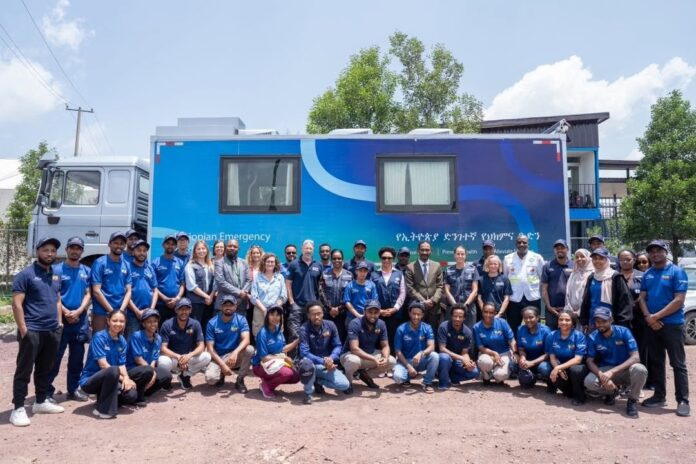
Ethiopia’s National Emergency Medical Team (EMT) has successfully secured formal international classification from the World Health Organization (WHO). This monumental achievement positions Ethiopia as the very first civilian Emergency Medical Team in the WHO African Region to attain international verification, standing alongside Senegal as the joint pioneer on the continent with a classified military unit.
The announcement marks the culmination of years of targeted investments, strategic planning, rigorous training, and robust institutional leadership. Spearheaded by the Government of Ethiopia through the Ministry of Health (MoH) and the Ethiopian Public Health Institute (EPHI), the verification process involved extensive technical backing from the WHO and global partners within the Emergency Medical Team Network.
To achieve this elite status, the Ethiopian National EMT underwent a painstaking evaluation process measured against strict global benchmarks. Independent assessors reviewed multiple operational pillars, including governance, specialized clinical services, supply chain logistics, information management, and infection prevention and control. Crucial components such as water, sanitation, hygiene (WASH) infrastructure, and overall operational readiness were also put to the test.
Pre-verification evaluations and large-scale simulation exercises proved the team’s capability to swiftly establish and manage a fully functional, self-sufficient field hospital capable of weathering complex public health crises.
Minister of Health Dr. Mekdes Daba emphasized the gravity of the achievement during the recognition ceremony. “The successful WHO verification of Ethiopia’s National Emergency Medical Team demonstrates our readiness to protect communities when emergencies strike,” Dr. Mekdes stated. “As we prepare to host the 7th Global Emergency Medical Teams Meeting this November, Ethiopia stands ready to welcome EMTs from around the world. We are prepared, we are committed, and we are ready.”
Emergency Medical Teams act as critical frontline responders during natural disasters, disease outbreaks, conflicts, and humanitarian emergencies. They operate as self-sustained clinical units capable of delivering rapid, life-saving medical care in volatile and challenging environments.
The newly classified Ethiopian EMT is no stranger to high-pressure environments. The team has already demonstrated exceptional operational value through vital deployments inside the country, including swift mobilization during the Gamo Zone landslide response and active containment support for emerging disease outbreaks.
Dr. Mesay Hailu, Director General of the Ethiopian Public Health Institute, noted that the international classification is an independent testament to the country’s growing competencies. “This is not a recognition we claim for ourselves, but one earned through rigorous and independent international verification,” Dr. Mesay remarked.
The timing of this milestone coincides with a pivotal period for health emergency management across Africa. Currently, 30 nations across the continent are actively developing native EMT capacities. This movement is heavily anchored by the Regional Framework on Emergency Medical Teams (2026–2030), which was adopted in August during the 76th Session of the WHO Regional Committee for Africa held right in Addis Ababa.
Dr. Francis Chisaka Kasolo, WHO Representative to Ethiopia, the African Union, and the UNECA, lauded the nation’s steadfast dedication. He noted that Ethiopia’s success highlights what can be accomplished through visionary national leadership, sustained financial backing, and robust international cooperation.