Kenya has officially assumed the presidency of the Trade and Development Board (TDB), the governing body of the United Nations Conference on Trade and Development (UNCTAD). This prominent new leadership role places Nairobi at the forefront of global economic governance, offering a strategic platform to advocate for heightened trade investment, economic resilience, and sustainable growth across the African continent.
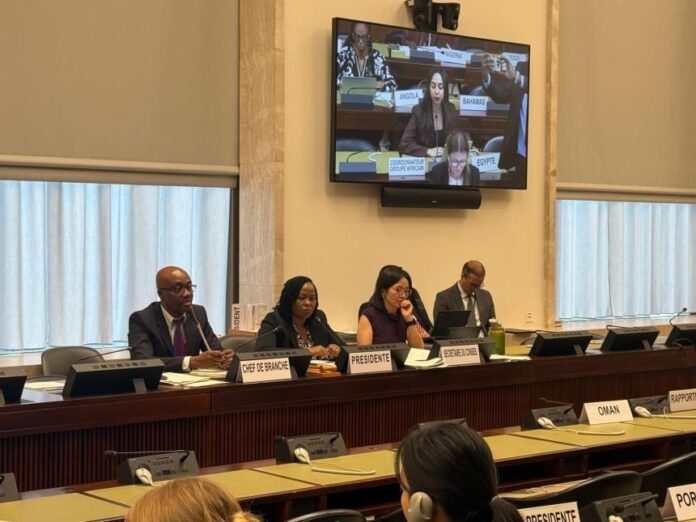
The announcement came as Kenya successfully chaired the high-stakes 73rd Session of the TDB. According to the Ministry of Trade, this prestigious assignment provides the country with a critical opportunity to shape international policy deliberations that will directly feed into upcoming items for consideration by the UN General Assembly. By steering these global discussions, Kenya intends to ensure that African priorities, structural challenges, and growth aspirations are firmly amplified on the world stage.
A primary focus of Kenya’s presidency is navigating and mitigating the severe cascading effects of acute global trade shocks. During the recent TDB session, member states and international delegates placed special emphasis on ongoing disruptions in the critical Strait of Hormuz. These geopolitical and maritime bottlenecks have sent shockwaves through international energy markets, triggering steep fluctuations in fuel costs, constraining fertilizer supplies, and destabilizing broader commodity pricing networks worldwide.
Because emerging and developing economies—particularly across Sub-Saharan Africa—remain disproportionately vulnerable to external supply chain shocks, Kenya’s leadership at the TDB is viewed as vital. The Ministry of Trade noted that under Kenyan chairmanship, the board is actively coordinating synchronized international actions to cushion vulnerable nations, secure vital energy corridors, and stabilize essential agricultural inputs like fertilizer.
Beyond crisis management, Kenya’s tenure at the helm of the TDB is structured around long-term structural transformation. The 73rd Session heavily scrutinized the major economic, financial, and trade headwinds currently confronting African nations. Discussions zeroed in on actionable frameworks required to unlock productive capacities, drive economic diversification, and attract sustainable foreign direct investment.
A central pillar of this agenda is addressing the persistent deficit in development financing. African economies require predictable, long-term capital to bridge massive infrastructure gaps, modernize agricultural value chains, and scale up industrialization. By leveraging its TDB presidency, Kenya is championing stronger multilateral cooperation, urging international financial institutions (IFIs) and UN specialized agencies to scale up concessional financing and risk-mitigation instruments tailored to the continent’s needs.
In an era defined by rapid digital transformation, the TDB sessions under Kenya’s guidance also evaluated the role of technology transfer in leveling the global playing field. Bridging the digital divide and enhancing technological capacities are seen as non-negotiable prerequisites for integrating African enterprises into lucrative global value chains.
The Ministry of Trade emphasized that Kenya’s overarching vision is to advance an inclusive, equitable, and sustainable trade architecture. This means steering away from traditional, extractive trade models toward a development-oriented framework that fosters local value addition, creates green jobs for Africa’s booming youth population, and builds long-term economic resilience against future global crises.