Kenyan business leaders and corporate heavyweights have gathered to demand immediate, sweeping regulatory overhauls designed to unleash the economic muscle of the East African Community (EAC).
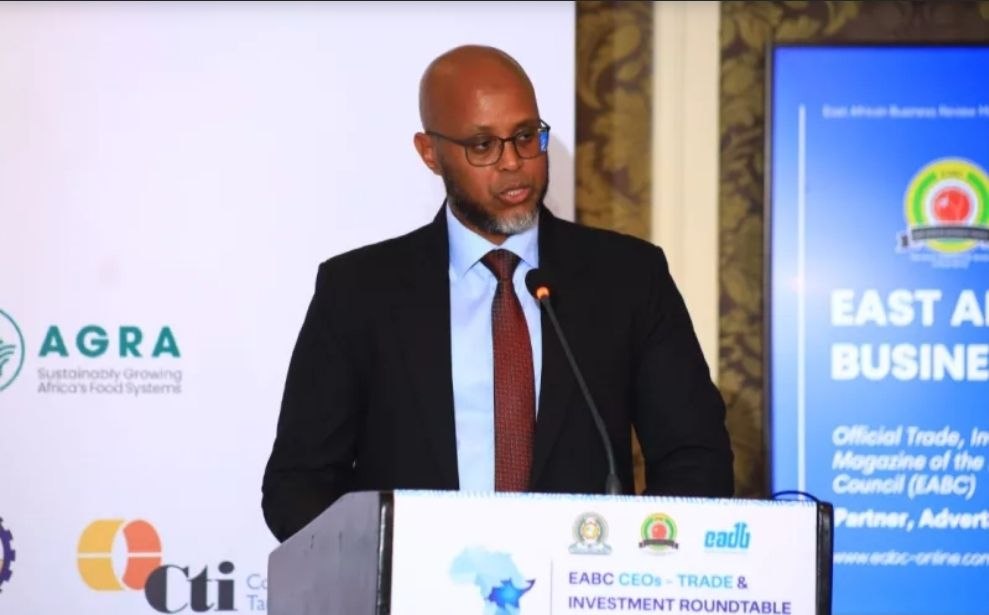
Gathered at a high-level CEOs–Trade and Investment Roundtable in Nairobi, captains of industry articulated a shared anxiety: despite immense nominal wealth, regional trade is heavily choked by self-inflicted administrative roadblocks. Chief among these growth retardants are pervasive non-tariff barriers (NTBs), chronic clearance delays at international borders, punishing logistics costs, and deeply fragmented legal frameworks that make cross-border commerce a labyrinth for investors.
The stakes are historically high. The collective EAC bloc comprises an estimated $400 billion (Sh51.7 trillion) market footprint, touching eight partner states and servicing a booming population of more than 360 million people. Nevertheless, the region’s trading metrics paint a picture of underperformance. Intra-regional commerce languishes between 12.5 and 15 per cent of total EAC trade volume, with economic analysts calculating that up to half of East Africa’s true commercial capacity is squandered on red tape.
Ahmed Farah, Executive Director of the East African Business Council (EABC), framed the regional market as Kenya’s indispensable next frontier for sustainable growth. While praising a notable 28 per cent expansion in intra-EAC trade observed through 2025, Farah cautioned that momentum is continually threatened by bureaucratic friction.
“Our priority must be to make the EAC a more competitive and predictable market for business,” Farah emphasized, pushing for systemic elimination of NTBs, rigorous alignment of product standards, lower transport overheads, and absolute accountability in enforcing regional treaties.
The dialogue drew sharp focus on investment flows as well. John Mwendwa, CEO of the Kenya Investment Authority (KenInvest), noted that while East Africa commands a healthy 21 per cent share of continental foreign direct investment inflows—roughly $14.6 billion—capitalists ultimately prioritize absolute market predictability and operational scale. Mwendwa urged regional administrations to halt destructive inward-looking competition, proposing instead a cooperative model of integrated value chains where nations pool resources and cross-border inputs based on core economic competencies.
Beyond factory floors, financial and logistical viability remains a critical hurdle. Duncan Onyango, CEO of Trade Catalyst Africa, underscored that true business competitiveness involves surviving volatile currencies, managing complex regional credit lines, and absorbing steep transit corridor tariffs long before seeing a return on investment. Ashif Kassam, Executive Chairman of RSM Eastern Africa LLP, added that policy unpredictability, costly electricity, and disconnected digital clearance portals further compound these operational pressures.
To chart a way forward, the private sector has mapped out actionable interventions. Key proposals call for time-bound mechanisms to resolve NTBs—complete with protective compensation clauses for disrupted enterprises—alongside heavy infrastructure investments in modern transport corridors. Business executives are equally pressing for unified digital payment gateways, harmonized professional certifications, and tourism-boosting reforms like an expanded digital East Africa Tourist Visa and open-skies aviation agreements.
With vital financial backers like the East African Development Bank (EADB) ready to deploy long-term capital into agribusiness, green energy, and manufacturing, the private sector’s directive is clear: fast-tracking authentic regional integration is the ultimate key to transforming East Africa into a dominant global economic powerhouse.