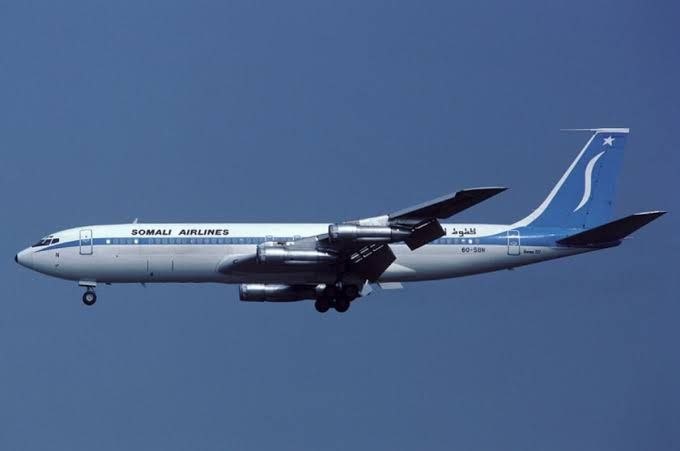
Somalia’s national flag carrier is preparing to return to commercial service after a gap of approximately 35 years, a milestone that observers view as a powerful symbol of the country’s gradual recovery and its ambitions to reconnect with regional and global markets.
Publicly available information shows that the relaunch of Somalia’s national airline follows decades of instability that began with the civil war in the early 1990s, when the former flag carrier halted operations and the country’s aviation infrastructure fell into disrepair. The planned restart of service is being framed in local and international coverage as both a practical transport project and a potent national symbol.
Reports indicate that the revived airline, using the historic Somali Airlines name, is intended to serve as a visible marker of state rebuilding, much like the restoration of central banking, telecommunications, and port operations over the past decade. The return of a flag carrier is viewed by analysts as a statement that Somalia is ready to manage complex, safety-critical services that once seemed out of reach.
Coverage of the project notes that the move comes roughly 35 years after the original airline disappeared from international schedules. The long interval highlights how deeply the civil conflict disrupted everyday mobility for Somalis and left the country reliant on foreign and private operators for both domestic and international air travel.
Aviation industry reporting indicates that the Somali government has secured modern Airbus A320 aircraft for the relaunched airline, replacing the ageing Boeing jets and turboprops that characterized the fleet before the civil war. The adoption of a widely used single-aisle type is expected to simplify crew training, maintenance, and leasing, aligning Somali operations with regional peers in the Horn of Africa and the Middle East.
Alongside fleet acquisition, public sources describe a broader effort to rebuild human capital for the aviation sector. Training programs for pilots, engineers, and cabin crew have been created in Mogadishu and abroad, including partnerships that send cadets to established flight schools. These initiatives are designed to ensure that a new generation of Somali professionals can staff the carrier rather than relying exclusively on expatriate expertise.
The airline’s return is closely tied to regulatory improvements. Information published by regional aviation bodies notes that Somalia has taken back control of its airspace and reclassified the Mogadishu Flight Information Region in line with international standards, restoring full air traffic control services after decades in which key functions were managed from outside the country. The relaunch of the IATA Billing and Settlement Plan in Mogadishu has also been highlighted as a foundation for integrating Somali carriers into the global ticketing and payment system.
According to published coverage, initial operations are expected to focus on short- and medium-haul routes linking Mogadishu with major regional destinations in East Africa and the Gulf, as well as key domestic cities. Aviation analysts suggest that early priorities will likely include corridors already popular with Somali business travelers and diaspora communities, such as connections to Nairobi, Addis Ababa, Djibouti, Jeddah, and cities in the United Arab Emirates.
The revived flag carrier will enter a market that has been sustained for years by private Somali airlines and foreign operators. Carriers such as Jubba Airways, Daallo Airlines, Freedom Airline Express, and African Express Airways have built networks that connect Somali cities with regional hubs, often operating under challenging security and infrastructure conditions. Major international airlines from countries including Turkey, Egypt, Ethiopia, and Uganda also serve Mogadishu.
Industry observers note that this established competition may constrain how quickly the national airline can expand. However, a state-backed carrier with access to bilateral agreements and coordinated airport development could reshape the market over time. Some analysts argue that a successful flag carrier might stimulate overall traffic growth rather than simply displacing existing operators, particularly if reliability improves and fares become more transparent.
Economic commentary on the project emphasizes the potential benefits for trade, investment, and tourism if the airline is able to operate sustainably. A functional national carrier can support export supply chains, medical travel, and government delegations, while also making it easier for foreign investors and aid partners to reach Somali cities without complex multi-leg itineraries.
The Somali diaspora, which is widely dispersed across Europe, North America, the Gulf, and East Africa, is seen as a particularly important passenger segment. Public reports suggest that planners view the airline as a way to offer more direct or coordinated connections for Somalis abroad, reducing travel times and reliance on distant hubs. Greater capacity on busy seasonal routes could also help stabilize fares during peak travel periods such as religious holidays and school breaks.
There are also expectations that the airline’s relaunch will create skilled jobs in operations, maintenance, ground handling, and administration. Over time, related sectors such as catering, training, airport retail, and tourism services may see knock-on benefits if traffic volumes grow. Observers caution, however, that these gains will depend on disciplined management, cost control, and consistent adherence to international safety and security standards.