The International Committee of the Red Cross (ICRC) has issued an urgent warning regarding an impending El Niño weather pattern that threatens to unleash catastrophic flooding across Somalia during the October–December rainy season. With climate projections painting a grim picture, humanitarian organizations warn that over five million people could face acute distress as severe rains loom over an already vulnerable nation.
According to the latest projections from the Integrated Food Security Phase Classification (IPC), the population experiencing severe food insecurity (Phase 3 or above) is expected to rise sharply to 5.4 million people. This dramatic increase is largely driven by severe flooding caused by the combined effects of El Niño and the Indian Ocean Dipole.
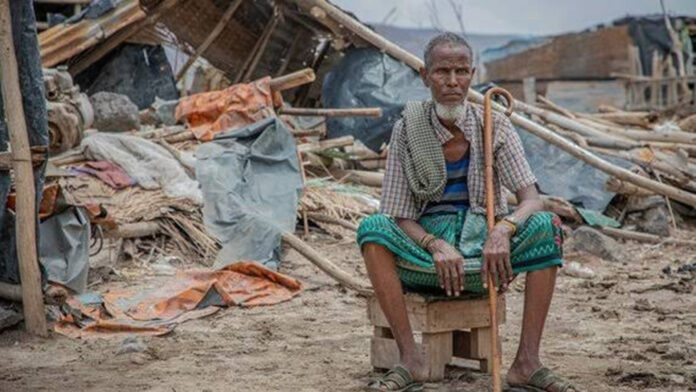
For the estimated 3.3 million Somalis living in informal displacement settlements, the impending downpours threaten further hardship. Many families, already displaced by years of ongoing conflict, reside in overcrowded camps in flimsy shelters constructed from sticks, scraps of cloth, and corrugated iron sheets. These settlements frequently lack proper sanitation and clean water infrastructure, heightening the risk of waterborne disease outbreaks when floods strike.
Residents in vulnerable areas have expressed deep anxiety over the forecasts. In the Ceeynu Nasri displacement camp in Hirshabelle state—a region heavily defined by the River Shabelle and notorious for seasonal inundation—residents fear the worst.
“We are terrified of the upcoming rains,” said Kamillo Muse, a 59-year-old resident of the camp. “After three years of not having good rainfall, it feels like it will return with a vengeance. If it pours, even people in proper houses will be forced to flee. So what do you expect will happen to us in the camps?”
The crisis presents an agonizing dilemma for rural communities and agricultural workers. In Bayahaaw village, situated on the outskirts of Jowhar town, farmers are forced to choose between planting crops and risking total destruction from river overflow, or leaving their fields fallow and facing severe hunger in the coming year.
Local leaders emphasize that flood damage extends far beyond the immediate weather event. Nuh Adan, a local farmer and community leader in Bayahaaw, noted that if riverbanks burst, agricultural recovery will take months:
“If the river breaks and the floods hit us, the effects will last until the next rainy season in March.”
Somalia has faced worsening flood crises over recent years. Reports from the International Federation of Red Cross and Red Crescent Societies (IFRC) highlight a growing cycle of climate vulnerability. In 2021, seasonal Gu floods affected roughly 166,000 people—a figure that surged to 460,000 in 2023. Later that same year, during the 2023–2024 El Niño, devastating floods impacted over 2 million people, destroying crops, livestock, homes, and critical infrastructure.
Aid agencies are deploying anticipatory action protocols, leveraging key lessons learned from previous climate events. Compared to past years, humanitarian teams benefit from improved predictive data and advanced early warning systems.
However, significant operational challenges remain. Antoine Grand, ICRC Head of Delegation in Somalia, highlighted the contrasting situation facing aid organizations:
“Better preparation and better data. That’s the good news compared to 2023. The bad news is that humanitarian funding and capacity in general have seriously decreased.”
Despite shrinking financial resources, relief operations are actively underway. The ICRC, in collaboration with the Somali Red Crescent Society, is working across high-risk regions—including Kismayo, Bardere, Jowhar, and Beletweyne—to mitigate impact.