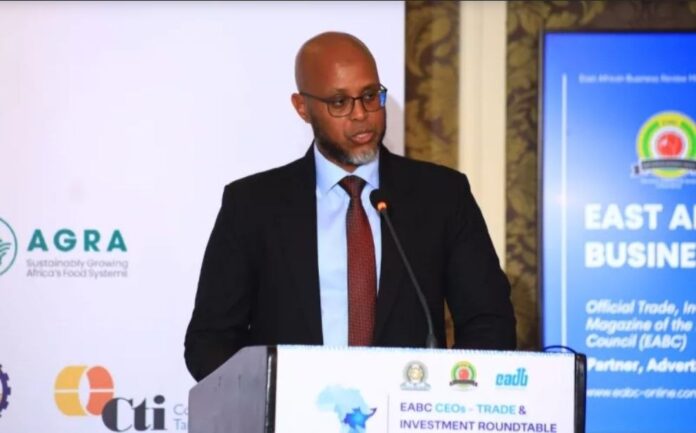
The Kenyan government has urged member states of the Intergovernmental Authority on Development (IGAD) to harmonize their cross-border certification standards. Officials emphasize that streamlining these operational processes is vital for accelerating trade and improving food security across East Africa.
Addressing a Regional Technical Workshop in Nairobi, Kennedy Anahinga, Director of Policy at the State Department of Agriculture, stated that fast-tracking Mutual Recognition Agreements (MRAs) under the African Continental Free Trade Area (AfCFTA) framework is essential. He noted that removing non-tariff barriers is critical to preventing intra-regional trade stagnation.
Anahinga stressed that eliminating duplicate inspections and testing procedures at shared border posts transcends routine bureaucracy. Rather, it serves as a core driver of economic transformation for citizens throughout the region.
“Advancing MRAs is therefore not a technical exercise for regulators alone; it is a trade facilitation agenda that speaks directly to jobs, incomes, and food systems resilience across our region,” Anahinga remarked.
Highlighting Kenya’s regional leadership, Anahinga noted that the nation was the first to ratify the AfCFTA in 2019. Kenya is currently pursuing continental accreditation for its conformity assessment bodies to guarantee seamless market access for local farm produce.
“Once approved, KEBS certification for Kenyan exports would be recognised across the continent—precisely the kind of mutual recognition this workshop is here to advance,” he added.
Reinforcing these views, Dr. Mohy Tahomi, IGAD Director for Economic Cooperation and Regional Integration, urged member countries to move past endless policy talks and focus on ground-level implementation. He asserted that an agreement’s true worth is proven only when border clearance times decrease for traders and farmers.
“An agreement on paper will not be enough,” Dr. Tahomi said. “The real success of the MRA will be measured by what happens at our borders, in our laboratories, in our certification bodies, and ultimately in the hands of our traders and producers.” He added that regional integration must extend beyond physical commodities to embrace digital integration, institutional collaboration, and shared technical expertise.
Deneswaree Mohun, Head of the NTMs and NTBs Elimination Division at the AfCFTA Secretariat, emphasized the importance of strengthened sanitary and phytosanitary (SPS) systems alongside digital certification tools.
Mohun explained that these systems safeguard consumer health while enhancing transparency and regulatory compliance. The AfCFTA Secretariat remains fully committed to helping member states build robust SPS infrastructure and adopt modern digital facilitation tools to unlock the true potential of intra-African commerce.