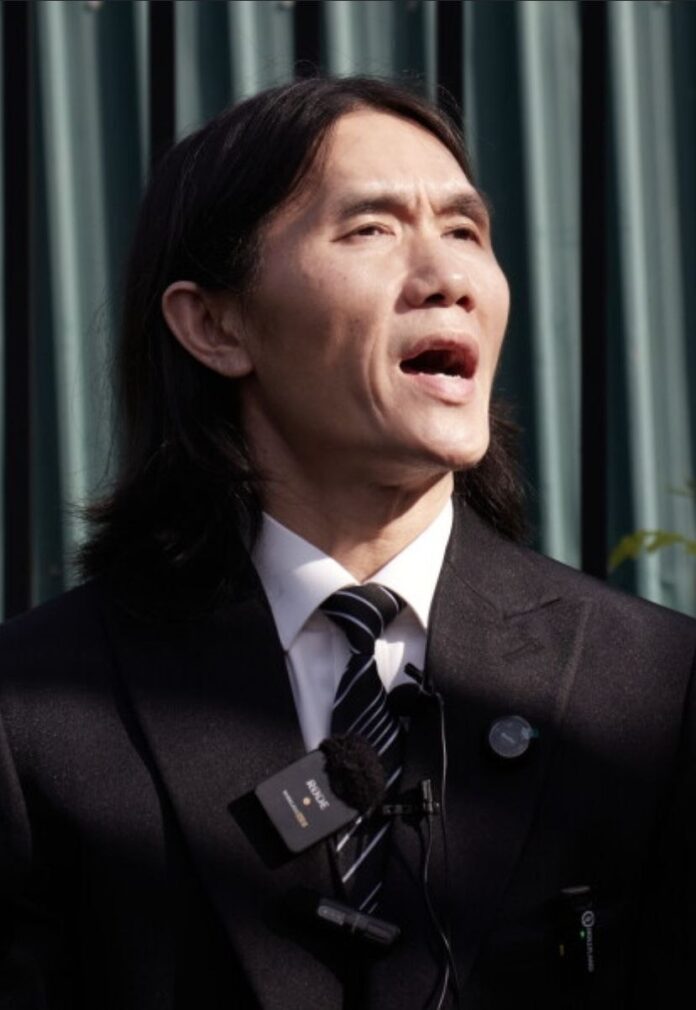
Tuan Phan, a 44-year-old Vietnamese national who was sent to South Sudan under the previous Trump administration’s controversial “third-country deportation program,” was repatriated to his homeland of Vietnam on Friday after spending more than a year in detention on African soil.
The Ministry of Foreign Affairs of South Sudan officially announced Phan’s repatriation during a press briefing on Friday. Ministry spokesperson Agok Anyar stated, “We are grateful that while in our custody Mr. Phan was very disciplined, joyful, and importantly, he remained healthy.”
Tuan Phan and seven other men were initially sent to Africa in May 2025 by order of the U.S. government. Midflight on their initial journey, a U.S. federal judge temporarily blocked the deportation to South Sudan, citing procedural irregularities. As a result, the men were rerouted to a U.S. military base in Djibouti. However, following a Supreme Court ruling that greenlit the removals, they arrived in South Sudan’s capital, Juba, aboard a military aircraft in July 2025.
All eight men had criminal convictions in the U.S. and were taken into immigration custody for deportation immediately after serving their respective prison sentences. Court documents show that Phan immigrated to the U.S. as a child in 1991. In 2000, shortly after turning 18, he received a 25-year prison sentence for shooting and killing someone during a gang altercation. Upon completing his sentence in March 2025, he was immediately detained by U.S. Immigration and Customs Enforcement (ICE) and slated for removal to South Sudan.
According to the monitoring initiative Third Country Deportation Watch, at least seven African countries have agreed to accept deportees who are not their own citizens as part of arrangements with the U.S. In exchange, the United States has agreed to pay millions of dollars to those recipient governments. To date, more than 180 people have been sent to various African nations under this framework.
The selection of South Sudan as a receiving nation ignited heavy criticism. The country is notorious for its exceptionally poor human rights record, rampant corruption, and systemic political instability. According to United Nations data, armed conflict displaced more than half a million people in South Sudan in 2025 alone.
In Juba, the deportees were confined to a gated house under the supervision of armed guards. Michael Bochenek, a senior counsel for Human Rights Watch, warned that keeping the men detained without any independent oversight or verification of their treatment raises serious questions about South Sudan’s compliance with basic human rights norms and safeguards against abuse.
While the details of deals made between the U.S. and other participating governments have been made public, the exact conditions of the South Sudan arrangement have remained shrouded in secrecy.
However, recently disclosed State Department documents reveal that after agreeing to accept the men, South Sudan made several heavy political requests to the U.S. government. Among these demands were sanctions relief for a former top South Sudanese official and U.S. assistance with the prosecution of a prominent exiled opposition leader.
Phan is the second individual from this specific group to be successfully repatriated. He follows Jesus Muñoz-Gutierrez, a Mexican national who was flown back to Mexico in September.