South Sudan is on track to begin importing electricity from Uganda by the end of this year or early next year. The ambitious cross-border energy initiative was revealed by the Minister of Energy and Dams, Agok Makur Kur, during an appearance on the Eye Radio show Sun Down. According to the minister, the government’s immediate strategy relies on tapping into Uganda’s Karuma Hydroelectric Power Station to feed the capital, Juba, and surrounding states.
South Sudan currently faces an acute energy crisis. Official estimates indicate that only about 7 percent of the country’s population has access to the national grid, leaving businesses, hospitals, and households heavily reliant on costly and unreliable alternative power sources.
Minister Makur emphasized that the influx of regional electricity is designed to provide immediate relief to urban power shortages and stimulate economic activity.
“The power plant project is progressing at Karuma in Uganda. As some of you may recall, I travelled to the border to assess the source of this power. The electricity is being transmitted from Karuma, passing through Nimule to Juba,” Makur stated during the broadcast.
Transmission infrastructure is advancing rapidly to connect the Karuma hydro project directly into Juba via Nimule, creating a vital energy corridor between the two neighboring East African nations.
A cornerstone of the cross-border project is the construction of a major central distribution hub in the Nesitu area on the southern outskirts of Juba, located in Central Equatoria State.
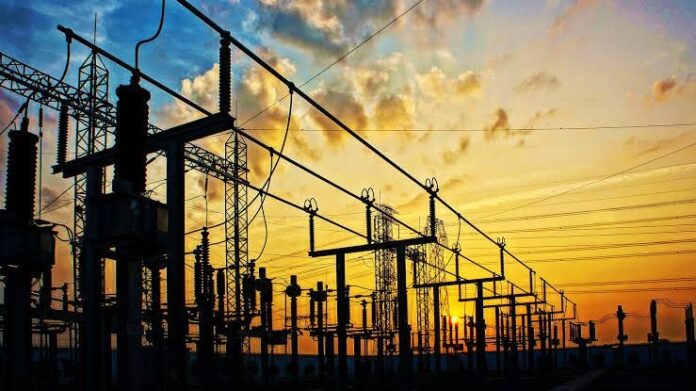
The Nesitu substation will act as the primary nerve center and carrier for the incoming power supply. In the initial phase, the distribution network will prioritize Juba and its adjacent states to maximum effect, helping to alleviate the sharp energy deficit. From Nesitu, the grid management systems will eventually route power further across the country as the infrastructure scales up.
“We have also constructed a substation in Nesitu, Central Equatoria State, which will manage all the power coming from Karuma. From this substation in Nesitu, the power supply to various states will begin,” Makur explained. “Good news about this development is expected before the end of this year or early next year.”
While importing electricity from Uganda offers a crucial short-term fix to keep the lights on and drive commerce, the Ministry of Energy and Dams stressed that purchasing power from neighbors is merely a temporary bridge.
The ultimate, long-term objective for South Sudan remains the development of its own domestic generation capacity, harnessing the immense potential of the White Nile River. Topping the government’s agenda is the long-discussed construction of the Fulla Dam in Nimule, Eastern Equatoria State.
Minister Makur confirmed that he has briefed President Salva Kiir on the critical importance of advancing the Fulla Dam project to secure genuine, self-sustaining national energy independence. “Fulla Dam continues to be our priority. During my briefing to the President, I reminded him of this initiative,” Makur said. “I told the President that we have significant potential, and this potential should be harnessed to develop our own dams. If I shared this vision with the President, there’s nothing stopping me from sharing it with the public.”