UN Human Rights project transforms refugee camps into communities
In Kenya, UN Human Rights’ work in Dadaab refugee camp strengthens human rights protection, builds capacity, supports refugees, host communities and civil society organisations during the country’s shift toward refugee integration.
Kenya’s approach to refugee management is at a turning point. As the country begins shifting away from long-standing camp-based systems toward a model centred on integration, places located in Northern Kenya, particularly the Dadaab refugee camps, continue to reflect the enduring weight of displacement.
As one of the largest and oldest refugee settlements in the world, and home to over 409,000 refugees, Dadaab stands as one of the most protracted humanitarian situations globally, shaped by chronic resource shortages, insecurity, and decades of marginalization.
In recent years, Kenya has introduced significant reforms aimed at addressing these challenges. The Refugees Act, 2021 and the Shirika Plan signal a move toward a more inclusive, rights-based framework designed to improve protection while creating shared opportunities for refugees and host communities alike. These policies reflect ambition but translating them into meaningful change remains uneven.
“While Kenya is shifting from a camp centric, aid dependent model toward local integration, the reality is Dadaab remains marked by strained resources, weak coordination, and mistrust between refugees and host communities,” said Professor Dr. Francis E. Owakah of the University of Nairobi, Centre for Human Rights and Peace.
His warning underscores a broader concern: without sustained investment in skills, systems, and trust-building, the transition risks falling short of its promise. According to Owakah, gaps in capacity and coordination could undermine both refugee dignity and community stability.
“Peacebuilding and social cohesion must be deliberately integrated into refugee management if Kenya’s progressive refugee policies, like the Refugees Act, 2021 and the Shirika Plan, are to succeed,” Owakah said.
Beyond refugee management, UN Human Rights has maintained broader engagement across Northern Kenya aimed at strengthening community resilience and accountability.
The Office has supported efforts to advance a human rights-based economy in Kenya by training communities on rights-based budgeting and equipping them with tools to participate in county-level budgeting processes that shape allocations for essential social services. Its engagement has also included civilian-security coordination initiatives and human rights monitoring efforts across the region.
OHCHR have made efforts to assist Kenya with this gap in refugee management. Over the past 18 months, a collaborative initiative led by UN Human Rights, alongside national and international partners, has focused on embedding peacebuilding and social cohesion into refugee management practices.
Working with institutions such as the Kenya National Commission on Human Rights, the University of Nairobi, UN Development Programme, UNHCR, and the World Food Programme, the project aimed to strengthen protection systems while fostering trust between communities.
“From the outset, the project was thoughtfully designed, embedding participation throughout the implementation phase, with clear interlinkages between its activities,” said Ibrahim Abdi Kassim, Senior Officer, Regional service, Kenya National Commission on Human Rights, Northeastern Regional Office. “Its implementation was meticulous, fostering an in-depth understanding of the context and structures that support human rights protection long after the project was completed.”
Despite measurable progress, the initiative is now ending due to funding constraints, which is raising concerns about how gains will be sustained.
Vincent Omunyin, a UN Human Rights Officer in Kenya, emphasized the risks of scaling back support at a critical moment. He highlighted the role of continuous monitoring and engagement in safeguarding vulnerable populations.
“Refugees are exposed to numerous human rights abuses and violations with gender-based violence emerging as the most prevalent concern,” Omunyin said.
Community impact
At its core, the project focused on building capacity from within communities and institutions. Over 18 months, it engaged 1,261 participants — including government officials, humanitarian workers and human rights defenders — through targeted training programs. These efforts helped strengthen accountability mechanisms, improve understanding of legal protections, and promote inclusive, rights-based approaches.
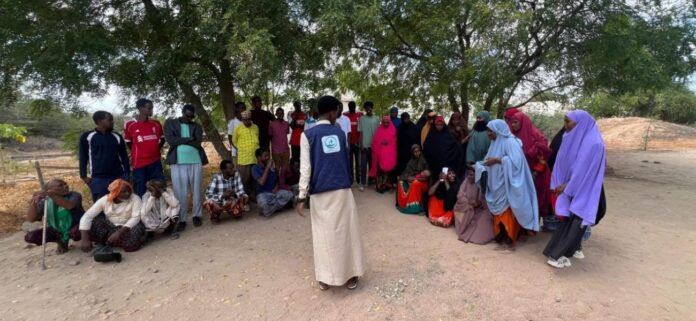
One of the project’s most impactful components was the creation of human rights forums. These platforms brought together refugees and authorities, enabling open dialogue and collaborative problem-solving. By connecting rights holders with duty bearers, the forums became a space for addressing grievances and identifying practical solutions.
For grassroots organizations, the impact was immediate and tangible. Anab, Founder and Director of Halgan, a refugee-led organization, described how the initiative transformed their work.
“I grew up in the camps. We are part of the community, and we know their needs, challenges, and problems when it comes to human rights,” Anab said.
Through engagement with community leaders, youth groups, religious figures, and marginalized populations, Halgan has worked to raise awareness of rights and encourage reporting of abuses. The training strengthened their ability to advocate effectively and engage with both government and non-state actors.
“We really benefited from this training,” she said. “Your Office informed and trained us about what our rights are. We did not know that some of our rights existed, but since the training, we now know that we have our own rights, and being a refugee doesn’t mean that we do not have rights.”
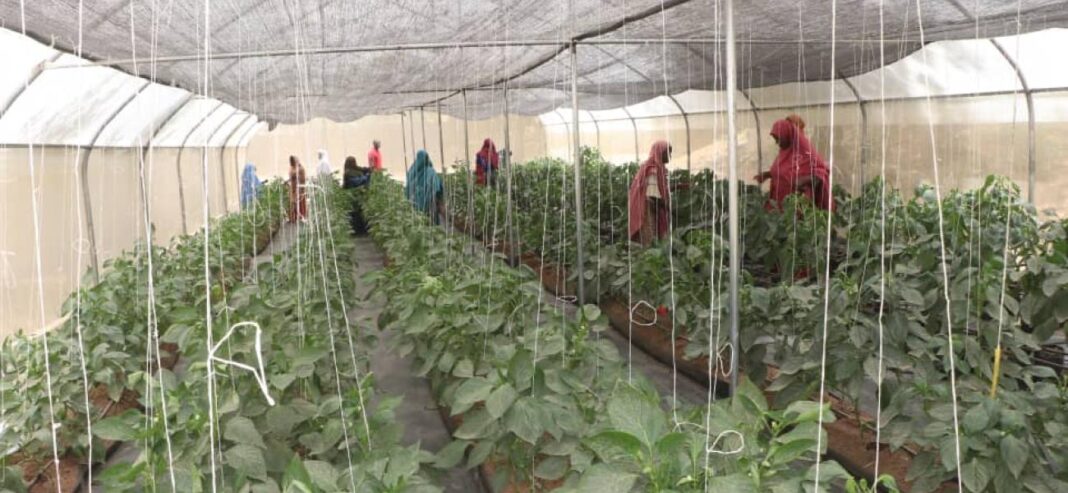
Beyond advocacy, the project helped foster resilience and opportunity. Halgan has supported vulnerable youth, including those at risk of suicide, and enabled more than 600 women to start small businesses by creating pathways toward economic independence.
“It has really changed us, and we can’t take it for granted. It supported us, but we need more. We need more engagement and more capacity building. We need more collaboration from your side,” Anab said. “The rate of human rights violations and abuses, vulnerability, and lack of accountability when it comes to human rights remains high.”
“We are asking for this work to continue so we can reach more people, so they can support one another and advocate for their rights,” she said.
For Anab and others, the significance of the initiative goes beyond technical support. It represents recognition, dignity and agency in circumstances defined by displacement.
“Being a refugee is our life, but it is not our choice,” she said. “We did not choose to be refugees.”