Although Ethiopia’s economy has been registering rapid and high Gross Domestic Product (GDP) growth over the past several years, structural challenges related to weak tax collection and high external debt vulnerabilities have severely threatened the country’s long-term sustainable development, according to a report released by the African Development Bank.
According to the African Economic Outlook 2026 report published by the African Development Bank (AfDB), while Ethiopia ranks among the fastest-growing economies in the East African region, it must resolve deep and complex macroeconomic deficiencies to sustain this growth in the long run. Among these challenges, the inability to effectively mobilize domestic revenue and the weakening capacity to service external debt have emerged as the primary bottlenecks.
The government of any nation builds the financial capacity necessary for development, public services, and the construction of an independent economic structure through taxes and duties collected domestically. However, Ethiopia’s tax-to-GDP ratio remains at an alarmingly low level of 7.3 percent. The report notes that this figure is highly concerning when compared to the average of other African countries.
The government’s inability to sufficiently mobilize domestic revenue has severely restricted its financial capacity to invest broadly in critical sectors such as education, healthcare, and infrastructure. The failure to expand the tax base to the desired extent, tax evasion in contraband and construction sectors, and the widespread expansion of the informal (shadow) economy have become major hindrances to effectively collecting revenue for the government treasury. This has forced the government to rely heavily on external and domestic borrowing to fill its budget deficit and support massive infrastructure projects.
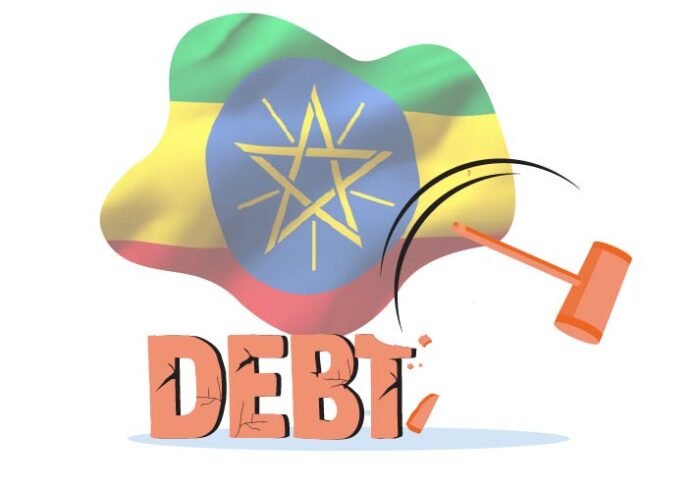
In addition to shortfalls in tax revenue, Ethiopia’s heavy external debt burden is exposing the country to significant macroeconomic instability. Data recorded as of 2025 shows that the country’s total public debt reached 42.8 percent of GDP. More worrisome, however, is that its external debt reached a staggering 220 percent when compared to the country’s total export performance.
This indicates that the foreign exchange revenue the country earns from exports is extremely small and disproportionate to service and manage its outstanding external debt on time. This extreme debt vulnerability has thrown the nation into a severe foreign exchange shortage, making it a massive challenge to cover debt payments due to external creditors and international financial institutions on time. Although the government is currently negotiating with the International Monetary Fund (IMF) and Paris Club creditors to undertake debt restructuring, the debt burden still casts a heavy shadow over the economy.
Economic experts warn that if these structural bottlenecks are not resolved, the impressive economic growth Ethiopia has recorded over the past years could be reversed. Under conditions of high debt burdens and a lack of tax revenue, launching new development projects becomes unthinkable, and it becomes difficult even to maintain and sustain existing infrastructure. This, in turn, weakens private sector investment, shrinking the capacity to create new employment opportunities.
Furthermore, the foreign exchange shortage has slowed down industrial growth by preventing manufacturing industries from importing the essential raw materials and machinery required for production.
The African Development Bank report indicates that to guarantee its long-term growth, Ethiopia must urgently take radical reform measures. First and foremost, it is imperative to modernize the tax administration system, support it with digitalization to prevent tax evasion, expand the tax base, and significantly increase domestic revenue.
Secondly, it is vital to enhance foreign exchange earnings by improving export performance, boosting agricultural productivity, and supporting sectors such as manufacturing and mining. Although the government’s recently launched macroeconomic reform program—specifically allowing the foreign exchange rate to be market-determined and opening the financial sector to foreign banks—is seen as a promising start to attract Foreign Direct Investment (FDI) and alleviate the debt burden, the report highlights that the ongoing reforms must be managed carefully and integrated with pro-poor protection and social safety net programs.