
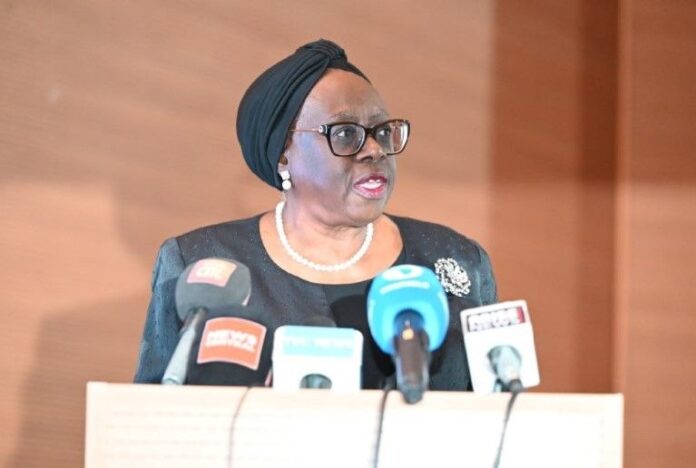
Chief Judges and judicial leaders from countries across the African continent have resolved to collaborate closely to support the success of the Africa Continental Free Trade Area (AfCFTA) through an efficient, reliable, and predictable dispute resolution system.
The landmark resolutions were reached at the conclusion of the third Africa Chief Justices’ Alternative Dispute Resolution (ADR) Summit, held in Nairobi, Kenya, from June 18 to 19.
Convening against the backdrop of one of the most ambitious economic integration projects in modern history, the continent’s judicial leaders agreed to explore practical ways to harmonize dispute resolution mechanisms across borders, making it significantly easier and faster to resolve commercial disputes.
According to a statement issued by Tobi Soniyi, Special Assistant on Media to the Chief Justice of Nigeria, the leaders emphasized that commercial confidence across Africa depends heavily on legal certainty. They noted that structured ADR can profoundly enhance commercial justice, protect the broader business environment, and directly support the implementation of the AfCFTA trade framework.
Addressing her peers at the summit, the Chief Justice of Nigeria (CJN), Justice Kudirat Kekere-Ekun—who served as Co-Chair of the session on financial sector disputes, tax certainty, and ADR—urged African judiciaries to proactively prepare for emerging challenges.
Justice Kekere-Ekun warned that the ultimate success of the AfCFTA will depend not only on traditional trade protocols, tariff reductions, and macroeconomic policies, but equally on the strength, reliability, and resilience of the institutions that support commerce.
She challenged central banks, tax administrations, ADR institutions, and judiciaries to work in synergy to reduce uncertainty, prevent disputes, and strengthen investor confidence. The CJN projected that the steady growth of intra-African trade will inevitably generate a new wave of complex cross-border challenges, including cross-border tax disputes, foreign exchange and banking payment system disputes, digital commerce disputes, the enforcement of foreign arbitral awards, and disputes arising from regional supply chains.
Stressing the importance of dispute prevention mechanisms, Justice Kekere-Ekun noted that modern commercial justice must move beyond the traditional reactive focus on resolving conflicts only after they arise, stating that the most successful commercial systems are those that reduce the need for litigation.
Furthermore, she cautioned against viewing ADR merely as an alternative procedure, advocating for its use as a strategic tool to reduce transaction costs, preserve commercial relationships, ease court congestion, and enhance the overall ease of doing business in Africa.
Sharing the Nigerian experience, Justice Kekere-Ekun highlighted the recent landmark decision by the Nigerian Supreme Court in the case of EMTS v. AFDIN Ventures Ltd. & Ors. (2026). She explained that the ruling reaffirmed vital principles of commercial certainty, including respect for arbitration agreements, the recognition that consent can be inferred from conduct, judicial restraint from re-litigating arbitral disputes on the merits, and the upholding of finality in arbitral awards, thus reinforcing Nigeria’s standing as an arbitration-supportive jurisdiction.
She also recommended Nigeria’s Tax Appeal Tribunal model as a significant institutional innovation that ensures the timely resolution of tax disputes and supports commercial certainty.
The Nairobi summit successfully advanced the core objectives of the African Chief Justices Alternative Dispute Resolution Forum (ACJADRF) to harmonize jurisprudence and establish common enforcement standards throughout the continent. In recognition of her leadership and contributions to commercial justice, Justice Kekere-Ekun was nominated by the Chief Justice of Kenya as the Vice Chairperson of the Africa Chief Justice ADR Forum, effective August 1, 2026.