The ambitious plan by technology giant Microsoft and UAE-based firm G42 to establish a massive data center in Kenya has reportedly stalled due to the country’s power supply limitations. The delay of this “Cloud Region”—the first of its kind in East Africa—serves as a significant setback for the region’s digital transformation goals, which had been pinned on this large-scale infrastructure project.
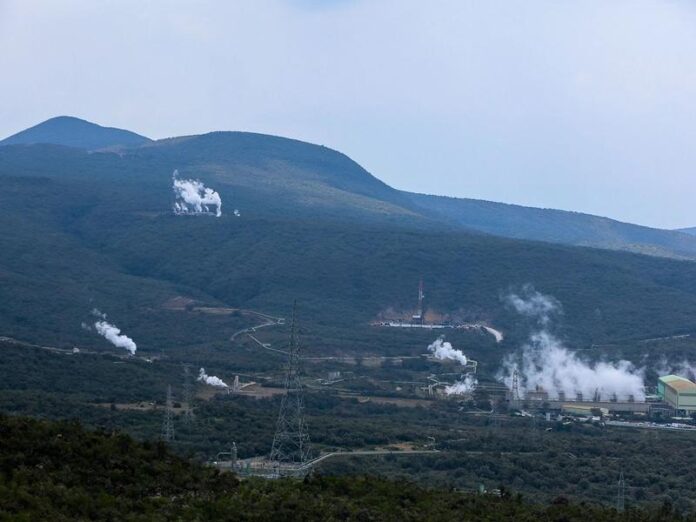
First announced in May 2024, the project envisioned a $1 billion investment to build a facility in the Olkaria region, powered by renewable geothermal energy. However, the sheer scale of the proposal has collided with the realities of Kenya’s national power grid.
Speaking in Nairobi last week, Kenyan President William Ruto revealed that the power requirements for the data center were far beyond what the country could currently sustain. According to the President, the facility would require 1 Gigawatt (1GW) of electricity at full scale. This represents one-third of Kenya’s total current installed capacity of 3GW.
“To switch on that one data center, we would need to shut off power for half the country; that’s when I knew there was a problem,” President Ruto stated, illustrating the stark gap between the country’s industrial ambitions and its current energy infrastructure.
President Ruto has set an aggressive target to increase Kenya’s national power capacity to 10GW by 2030 to resolve these shortages. However, achieving this vision requires an estimated $38 billion in funding and infrastructure investment. The government is currently looking toward international lenders and private investors to bridge this massive financial gap.
Microsoft had intended for this center to provide East African customers with high-speed access to Microsoft Azure services and Artificial Intelligence (AI) tools. While the project was originally targeted for a May 2026 launch, it has fallen off track after the National Treasury failed to clear the project’s concept note and power guarantees remained unaddressed.
Despite the halt of the Microsoft project, smaller-scale data center developments continue across the country. Airtel’s Nxtra is currently constructing a 44MW facility in Tatu City, while EcoCloud has broken ground on “Project Eagle” near the geothermal plants in Olkaria. Because these projects operate at a much lower capacity than Microsoft’s 1GW proposal, they do not pose the same immediate threat of overwhelming the national grid.
Analysts suggest this development serves as a wake-up call for African nations: digital economy agreements must be backed by foundational infrastructure. Without a stable and massive power supply, high-tech “hyperscale” investments remain out of reach.
If Kenya cannot move quickly to close its $38 billion energy funding gap, experts warn that tech giants like Microsoft may pivot their focus to other African nations with more robust power surpluses.