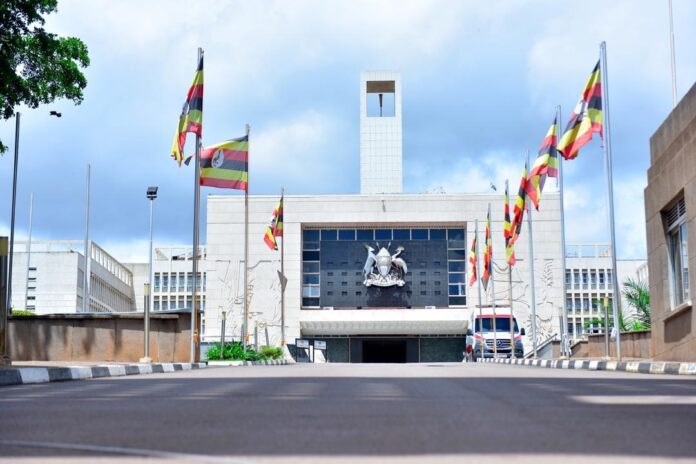
Lawyers, civil society leaders, and opposition figures are voicing strong opposition to the Ugandan government’s recently introduced Protection of Sovereignty Bill 2026, In a powerful statement released this week, the Uganda Law Society (ULS) described the draft bill as a “constitutional coup” aimed at undermining the country’s democratic foundation rather than protecting national security.
This bill, which is being fast-tracked through Parliament, stipulates that individuals or organizations found to be promoting “foreign interests” could face up to 20 years in prison Additionally, it imposes a strict cap on the annual financial support any organization can receive from abroad, limiting it to no more than 400 million Ugandan shillings (approximately £79,000).
Anthony Asiimwe, Vice President of the Uganda Law Society, argued that the bill strips power from the people and hands it to the government. “The bill replaces the constitutional principle that ‘power belongs to the people’ with ‘power belongs to the government,'” Asiimwe said. “This is not a law enacted for sovereignty; it is a law directed against the sovereign people of Uganda. It is an imposition of the fears of those in power onto the Constitution.”
Critics argue that the vague definitions within the bill, such as “foreign interests,” will serve as tools to silence journalists, human rights activists, and political opponents. By cutting off the sources of funding and ideas for civic participation, they say the government aims to ensure that no independent movement exists to challenge the established order.
Opposition to the bill has extended beyond domestic borders. The World Bank, in a rare and strongly worded letter to Parliament, warned that the law could criminalize its daily development activities. Since international organizations are broadly categorized as “foreigners” in the current draft, global partners fear that the essential support they provide for health, education, and development could expose them to criminal charges.
Julius Mukunda, a member of the Civil Society Budget Advocacy Group, warned of a potential economic crisis. As Uganda’s development model relies heavily on foreign aid, such restrictions could weaken the value of the Ugandan shilling and slow down economic activity. “Foreign capital fills domestic gaps; restricting these funds will lead thousands of Ugandans into extreme poverty,” Mukunda stated.
President Yoweri Museveni and State Minister for Internal Affairs Gen. David Muhoozi have maintained their stance, asserting that the bill is a necessary shield to protect the country from external instability. Following the 2024 youth protests, Museveni has repeatedly stated that Uganda is not a “neo-colony.”
In a message posted on his X (formerly Twitter) social media page, the President dismissed concerns raised about investment as “noise,” though he did agree to certain amendments. According to the amendments presented by the Attorney General’s office, financial institutions, religious organizations, and medical facilities have been exempted from the bill’s strict limitations.
Even though the government has made certain amendments, legal professionals remain skeptical. Many point out that the push to pass the bill before the President’s swearing-in ceremony on May 12 indicates a political desire to suppress opposition before the new term begins.
As the debate intensifies, the international community and local activists are calling on Parliament to reject the draft entirely. They argue that the word “sovereignty” should never be used as a pretext to destroy the constitutional rights of the citizens.