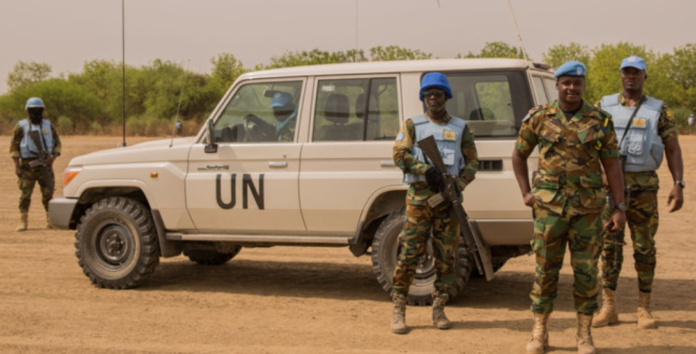
The United Nations Security Council voted on Thursday to extend the mandate of the United Nations Mission in South Sudan (UNMISS) for an additional year. The resolution, drafted by the United States, authorizes the peacekeeping mission to continue its operations until April 30, 2027.
In the 15-member council’s voting process, 13 members voted in favor of the extension, while Russia and China abstained. This extension comes at a critical juncture where the international community is showing significant impatience over the stalled peace process and delays in implementing the “Revitalized Peace Agreement,” which was intended to end years of civil conflict in South Sudan.
While the resolution maintains the core objectives of UNMISS—namely protecting civilians, facilitating the distribution of humanitarian aid, and supporting the peace process—the negotiations leading up to the vote were marked by deep disagreements. Discussions focused primarily on troop levels, the mission’s political influence, and the use of “thematic language” regarding the impact of climate change on security.
During the meeting, U.S. Envoy to the United Nations, Mike Waltz, delivered a stern message, cautioning that peacekeeping is not a permanent solution. Waltz stated, “Peacekeeping operations are temporary tools intended to help host governments overcome peace and security crises; they should not be an indefinite source of support for national governments.” He further warned against the mission being exploited by government entities, calling for transparency in public revenues and ensuring that humanitarian aid reaching the South Sudanese people is utilized effectively.
The abstentions by Russia and China highlight the widening divide among global powers regarding intervention in African affairs. Both countries argued that the U.S.-proposed resolution places unnecessary pressure on the South Sudanese government.
China’s Deputy Envoy, Sun Lei, stated that the Security Council should prioritize the “legitimate concerns” of the host government rather than applying unilateral pressure, warning that failing to do so could yield counterproductive results for the peace process. Similarly, Russia’s Deputy Permanent Representative, Anna Evstigneeva, expressed support for the peacekeepers in South Sudan but criticized the United States for attempting to “isolate” the current South Sudanese leadership through diplomatic pressure.