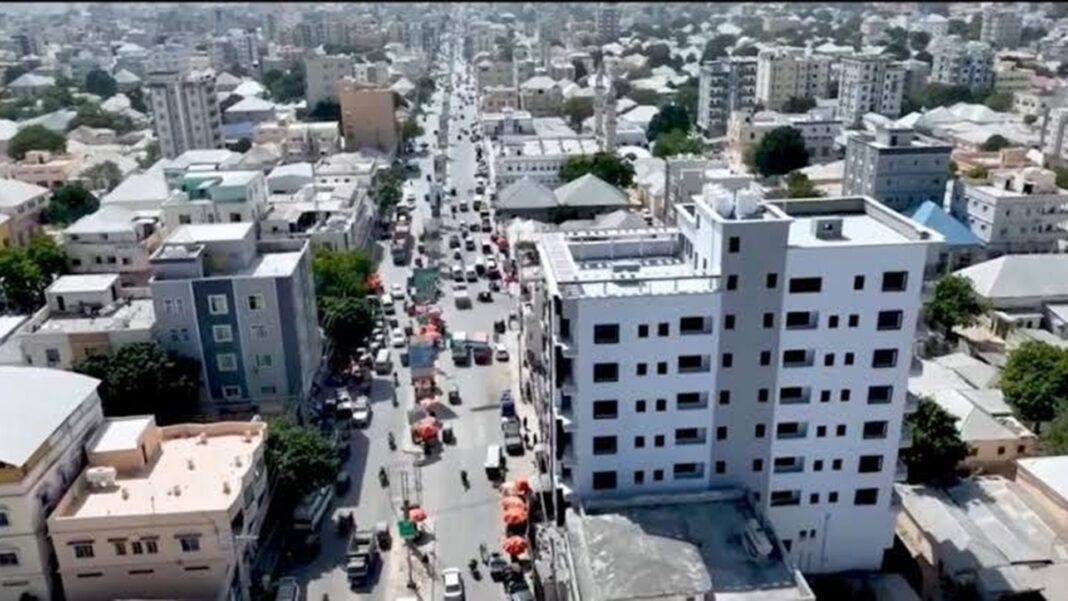
South Sudan has officially launched a $267 million electricity interconnection project with Uganda, a major infrastructure initiative aimed at tackling the country’s severe power deficit by importing affordable electricity from its eastern neighbor. The project, supported by the African Development Bank (AfDB), was launched in Juba on Tuesday by the Ministry of Finance and Planning, marking a significant step toward integrating South Sudan into the regional power grid and reducing its reliance on costly diesel generation .
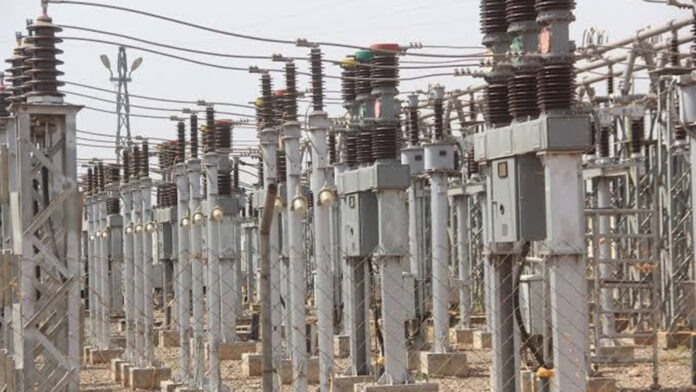
The centerpiece of the initiative is a 299-kilometer, 400-kilovolt double-circuit transmission line running from Gumbo, near the capital Juba, to the Olwiyo substation in northern Uganda, passing through the border town of Nimule . The scope of work also includes the construction of new substations at Gumbo and Bibia, the upgrading of existing facilities in Uganda, and the expansion of distribution networks in Nimule and Juba to facilitate last-mile connections to homes and businesses . According to the African Development Fund, the project is designed to enable an average annual exchange of 624 gigawatt-hours of electricity and is projected to improve access for approximately 286,710 people in South Sudan once fully operational .
The launch follows an initial milestone earlier this year when electricity imported from Uganda was commissioned in Nimule, marking the first time the border town received cross-border power. The Ministry of Finance stated that this commissioning represented tangible progress in implementing the bilateral electricity agreement and served as a precursor to extending the connection to Juba and other major towns . The project is part of broader regional efforts to integrate electricity networks under the East African Power Pool (EAPP), a framework that allows member states to trade power across borders, thereby optimizing the use of surplus generation capacity in countries like Uganda while addressing deficits in neighbors such as South Sudan .
Background: A Long-Awaited Solution to a Chronic Crisis
The significance of this project is best understood against South Sudan’s stark energy landscape. The country has one of the world’s most underdeveloped electricity sectors, with access rates hovering around 6.4 percent of the population—ranking among the lowest globally . The national grid is virtually non-existent, consisting of isolated distribution networks in a few urban centers, while the vast majority of the population relies on biomass or expensive diesel generators. Electricity tariffs in South Sudan average approximately $0.42 per kilowatt-hour, among the highest in the world relative to income levels, a consequence of generation costs that far exceed revenues and a sector plagued by chronic financial unsustainability . The African Development Fund noted that the interconnection project specifically aims to address the “deficit, reliability and affordability” of electricity in South Sudan while providing a market for Uganda’s excess clean generation .
The groundwork for this initiative was laid nearly a decade ago. The two countries signed a memorandum of understanding in 2015, and the project has since been coordinated by the Nile Equatorial Lakes Subsidiary Action Program (NELSAP), a body under the Nile Basin Initiative . Financing has been assembled from multiple sources. In December 2024, the African Development Fund approved $153.66 million for the project, including a $119.21 million loan for Uganda and a $32.50 million grant for South Sudan, alongside a $1.95 million grant to the Nile Basin Initiative. The European Union is providing a €48.93 million grant for South Sudan, while the Ugandan government has committed matching funds . The $267 million figure cited by the South Sudanese ministry is slightly higher than earlier estimates, though officials did not explain the difference .
Speaking at the launch, Benjamin Ayali Koyongwa, Undersecretary for Planning at the Ministry of Finance and Planning, expressed gratitude to the AfDB and other development partners for their continued cooperation. Fouzia Haji, the AfDB’s representative, emphasized that electricity is essential for households and businesses and that the project is expected to support economic development in both South Sudan and Uganda . The launch was also attended by Madhieu Achuil Mawien, Undersecretary at the Ministry of Energy and Dams, along with Ugandan representatives and officials from the ministry’s Aid Coordination Directorate .
While the project represents a critical lifeline for South Sudan’s energy aspirations, challenges remain. The initial rollout in Nimule has already faced setbacks from vandalism and infrastructure encroachment, with officials reporting that some electricity poles are blocked by shops and supporting wires tampered with . Nevertheless, the broader interconnection is designed to serve as a backbone for future regional electricity exchanges, with the Gumbo substation built to accommodate a future connection from Ethiopia, potentially transforming South Sudan from an energy isolate into a transit hub within the East African Power Pool . For a country where the vast majority of citizens live without reliable power, the successful completion of this transmission line could mark the beginning of a long-delayed transition toward modern, affordable energy.