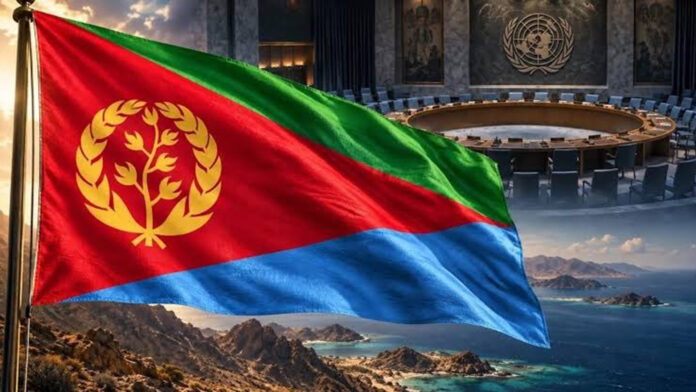
The Government of the State of Eritrea has issued a sweeping policy statement declaring its sovereignty, independence, and territorial integrity “non-negotiable, inviolable, and sacrosanct,” in a sharp escalation of rhetoric amid mounting tensions with neighboring Ethiopia. The statement, released by the Eritrean government and dated October 21, 2026, categorically rejects any suggestion of a border dispute with Ethiopia and accuses Addis Ababa of waging a deliberate, multi-year campaign of geopolitical aggression across the Horn of Africa.
Asmara asserted that under “no circumstances, preconditions, or threats of force” would Eritrea compromise or negotiate over its sovereign domain. It stated flatly that “there is no legitimate or ‘good faith dispute’ between Eritrea and Ethiopia,” dismissing any framing of the tensions as a bilateral border disagreement. The government warned that Ethiopia’s alleged efforts to covet Eritrean territory—reportedly justified by Addis Ababa’s view that another nation’s coastline is “strategically necessary”—places “every single border in Africa at permanent risk.” Eritrea framed its own border defense as a stand for the principle underpinning the security of all African states.
The statement places responsibility for regional instability squarely on Ethiopia’s ruling Prosperity Party, which it accuses of executing a “deliberate, unprovoked, and multi-year campaign of geopolitical aggression” through military posturing, diplomatic hostility, and economic intimidation. Eritrea criticized what it characterized as generic international calls for “both sides” to exercise restraint, arguing that such appeals construct a “false equivalence between the perpetrator of regional aggression and the state defending its lawful sovereignty.” According to Asmara, meaningful de-escalation can only occur when “the primary instigator of the crisis terminates its hostile policies.” The government also dismissed accusations of Eritrean invasion as “entirely fabricated,” describing them as part of a “coordinated information warfare campaign” designed to deflect accountability and justify revisionist ambitions.
Eritrea insisted that the Eritrean Defense Forces remain stationed entirely within internationally recognized borders and that their posture is “explicitly defensive” and fully compliant with international law. It rejected allegations of a continued Eritrean presence in sovereign Ethiopian territory following the Pretoria Agreement, saying such claims refer instead to Eritrean territories endorsed by the Eritrea-Ethiopia Boundary Commission (EEBC) Arbitral Award of April 13, 2002. Asmara further stated that it harbors “zero irredentist claims” and asserts no entitlement over any Ethiopian territory.
Despite what it described as continuous provocations and subversion campaigns, Eritrea maintained that it has exercised “high strategic patience,” portraying this restraint as “the primary stabilizing anchor keeping the Horn of Africa from descending into an unchecked, catastrophic regional war.” While committing to peace, the government warned that it remains “fully prepared and legally entitled under international law to defend its sovereignty against any acts of aggression or threats of invasion.”
Eritrea minister of information said it has “no appetite” for manufactured conflict or zero-sum geopolitical maneuvers and reaffirmed its commitment to regional stability anchored in mutual respect and non-interference. It called on the international community to insist on “absolute compliance with international law,” urging that expansionist doctrines and revisionist border claims be “permanently repudiated in favor of absolute respect for the sovereign equality of all states.”