A major international climate science meeting held in Ethiopia has ended without agreement on the publication schedule for the next set of global climate assessments, raising concerns about the future of climate research funding and the availability of scientific evidence ahead of a key United Nations climate review in 2028.
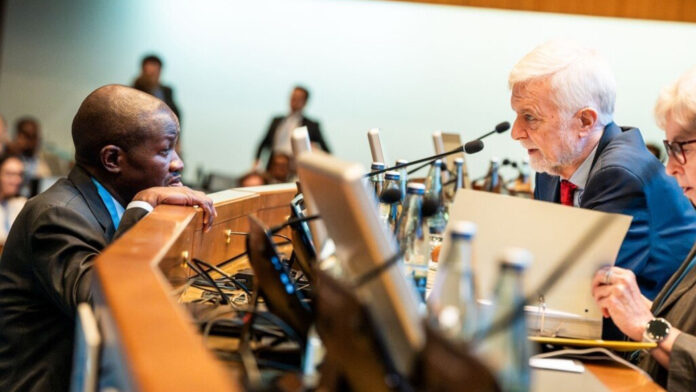
The 65th session of the Intergovernmental Panel on Climate Change (IPCC), held in Addis Ababa, concluded in what IPCC Chair Sir Jim Skea described as a “profound disappointment” after governments failed to reach consensus on the timeline for the organization’s Seventh Assessment Report (AR7) and its associated budget.
The deadlock marks the sixth consecutive time that governments have failed to agree on a schedule for the reports, which provide policymakers with scientific assessments of climate change, its impacts and possible responses.
The disagreement has intensified concerns that the reports may not be completed in time to inform the United Nations’ second global stocktake, scheduled to conclude in late 2028. The stocktake is intended to assess global progress toward meeting the goals of the Paris Agreement and guide future climate action.
Countries remain divided over how quickly the IPCC should complete its next assessment cycle. Some governments want all three working-group reports published in time to inform the 2028 global stocktake, arguing that policymakers need the latest scientific evidence to evaluate progress and identify gaps in climate action.
Other countries, including India, Kenya, Russia and Saudi Arabia, have argued that the scientific process requires more time. They have raised concerns about the proposed timetable, with some assessments potentially being published after the global stocktake concludes.
The lack of agreement leaves uncertainty over when the reports will be released and how effectively they can contribute to international climate negotiations.
The IPCC’s assessment reports are widely used by governments, researchers and international institutions to understand climate risks and inform decisions on emissions reductions, adaptation and resilience. Delays could limit the availability of updated scientific findings during an important period for international climate policy.
The meeting also highlighted growing financial pressure on the IPCC, with concerns that its trust fund could be depleted by the end of 2028 if contributions remain at the levels recorded in 2025.
According to the proposed budget, approximately 33 million Swiss francs will be needed to support the seventh assessment cycle. However, financial contributions have weakened in recent years, raising questions about whether the organization will have sufficient resources to complete its work on schedule.
Contributions in 2025 were 5.3 million Swiss francs lower than in 2023. By early July 2026, only 16 countries and organizations had contributed a combined 2.8 million Swiss francs, highlighting the gap between the resources available and the funding required.
The United States has not contributed to the IPCC since 2024, adding to the financial uncertainty facing the organization.
The funding concerns come as governments continue to depend on IPCC assessments to guide climate policy, evaluate risks and support decisions on responding to global warming. A sustained shortfall could place additional pressure on the assessment process and the scientists involved in preparing the reports.
Despite the political and financial challenges, the scientific work is continuing. Nearly 120 authors involved in the assessment process have signed a letter pledging to continue their work, signalling their commitment to producing the next generation of climate assessments.
The IPCC is also scheduled to publish a special report on cities in 2027. The report is expected to contribute to understanding the climate challenges facing urban areas, where growing populations, infrastructure and exposure to extreme weather make adaptation increasingly important.
Beyond the publication schedule and budget, the Addis Ababa meeting exposed other disagreements among governments over the IPCC’s procedures, meeting reports, the use of artificial intelligence and gender inclusion.
The unresolved issues illustrate the challenges of reaching consensus among governments with differing priorities while maintaining a process that depends on international cooperation and scientific assessment.
The failure to agree on a timetable leaves the IPCC facing two linked challenges: securing the financial resources needed to complete its assessments and establishing a schedule acceptable to its member governments.
The timing is significant because the next assessment cycle is expected to provide scientific evidence for decisions on climate mitigation and adaptation during a critical period for the Paris Agreement.
Without agreement on the publication timeline, uncertainty will persist over whether policymakers will have all three working-group reports available before the 2028 global stocktake concludes.