
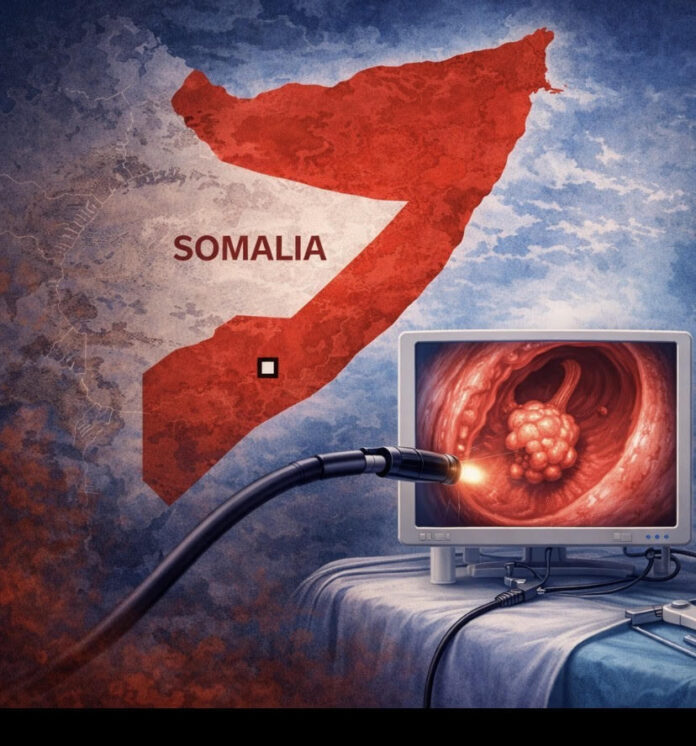
A groundbreaking multicenter observational study has cast a sobering light on the devastating burden of esophageal cancer in Somalia, revealing that systemic healthcare gaps and late-stage presentations are driving a mortality crisis in the Horn of Africa.
Published in the medical journal Cancer and led by Dr. Omar Abdihamid, this research represents the first extensive effort to analyze a long-neglected health crisis in the region.
Data collected between 2022 and 2024 from two major diagnostic centers in Mogadishu shows that the majority of patients seek medical help only after the disease has reached an advanced stage, severely limiting the possibility of successful treatment.
The study explains that this delay is not a matter of personal choice but is an “inevitable consequence” of the total absence of early screening programs and a critical shortage of oncology services.
The research further argues that esophageal cancer in this region is as much a result of social and structural problems as it is a biological condition.
Although East Africa is globally recognized as part of a “high-incidence cancer belt,” Somalia still lacks a formal cancer registry to track outcomes or inform public health policy.
Dr. Omar Abdihamid, Vice President for East Africa at the African Organization for Research and Training in Cancer, noted that while the situation mirrors patterns seen in northern Kenya, the crisis in Somalia is intensified because the necessary healthcare systems are not just weak, but entirely non-existent.
Key factors contributing to these high death rates include rural and nomadic lifestyles, severe financial burdens on families, and persistent diagnostic delays.
Another significant finding of the study is the regional nature of cancer care, which often transcends national borders.
Because specialized treatment is frequently unavailable locally, patients travel from rural Somalia to Mogadishu and then onward to Kenyan cities like Garissa and Nairobi.
This mismatch between the regional need for care and the lack of integrated national systems has led to the loss of many lives, as patients often reach the end of these complex journeys only after the disease has become irreversible.
In response to these findings, researchers are calling for a fundamental shift in the approach to cancer treatment in Somalia, emphasizing that the most critical “innovation” needed is basic accessibility rather than expensive new technologies.