By HER staff reporter
France has formally ruled out establishing a permanent military base in Kenya, marking a significant shift in how Paris plans to conduct its defense diplomacy across the African continent.
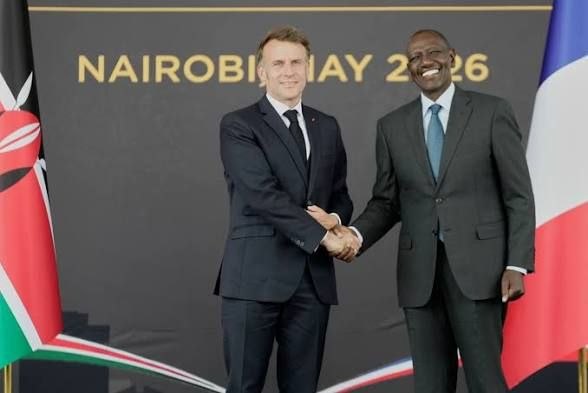
Outgoing French Ambassador to Kenya, Arnaud Suquet, made the announcement during a farewell meeting with President William Ruto at State House Nairobi. Suquet, who is returning to Paris headquarters as the director for Africa and the Indian Ocean, explained that France is deliberately abandoning the model of permanent military deployments that historically defined its presence in parts of the continent. Instead, Paris is pivoting toward a framework of flexible partnerships tailored to the specific needs of individual nations.
“We’re not looking at filling the void. We don’t want to reproduce the security or military partnerships we had before. It has to be a different framework,” Suquet stated in an interview. He was careful to emphasize that stepping away from permanent bases does not signal a retreat from security engagement altogether, noting that cooperation in science and defense remains a priority.
The clarification comes on the heels of a bilateral Defence Cooperation Agreement signed by Kenya and France in October 2025. The pact, finalized by Kenyan Defence Cabinet Secretary Soipan Tuya and Ambassador Suquet at Defence Headquarters in Nairobi, provides a structured foundation for intelligence sharing, maritime security, peacekeeping training, and humanitarian assistance.
However, Suquet stressed that the agreement should not be interpreted as an effort by France to plant a permanent military foothold in East Africa, nor is it intended to displace Kenya’s other Western security partners. France has steadily reduced its military footprint across the continent, closing almost all of its traditional permanent bases. Today, Djibouti remains its primary permanent military installation in Africa.
This strategic recalibration unfolds as France attempts to repair and redefine its relationships across Africa, particularly in West Africa, where French forces have faced expulsions and widespread public pushback in recent years. By presenting its engagement as a partnership of equals rather than an extension of colonial-era arrangements, Paris is seeking a clean slate.
Kenya offers a crucial testing ground for this modern diplomatic approach. Unlike France’s traditional partners in Francophone West Africa, Kenya shares no colonial history with Paris and already maintains robust, diversified security architectures with international allies such as the United States, the United Kingdom, Turkey, Ethiopia, and various European and Asian nations. Suquet explicitly noted that France has no desire to become Kenya’s exclusive or “reference” security partner.
Instead, the cornerstone of the bilateral security relationship will be mutual interest in maritime security and information sharing. Both nations share distinct strategic stakes in the western Indian Ocean—France via its overseas territories like Mayotte, and Kenya through its vital positioning along the East African coast. These shared interests have grown more urgent in light of recent disruptions in the Red Sea and the wider Middle East, which have exposed the vulnerability of vital global shipping lanes and heightened threats from maritime terrorism, piracy, illegal fishing, and trafficking.
Rather than deploying static troops, future French military engagement in the region will rely on mobility, joint training exercises, and targeted cooperation. The model prioritizes adaptability, allowing Paris to support partner countries dynamically without occupying physical footprints that have historically drawn political friction. Through this flexible posture, Kenya and France aim to secure mutual regional stability while charting a modern course for international defense cooperation.