By HER staff reporter
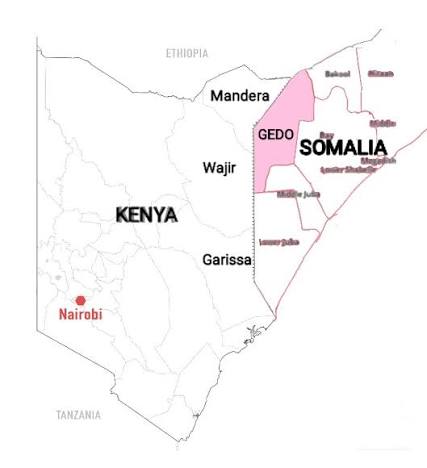
Kenya and Somalia are taking concrete steps to operationalize the extension of the Isiolo-Mandera road corridor directly into Somalia, introducing a new trade, digital, and security artery across the Horn of Africa. This diplomatic and developmental momentum follows a high-level strategic meeting between Somalia’s Ambassador to Kenya, Jabril Abdulle, and Kenya’s Principal Secretary for Roads, Engineering Joseph Mbugua.
During their discussions, both nations agreed to form a Joint Technical Committee to fast-track plans for extending the multi-million-dollar World Bank-backed Horn of Africa Gateway Development Project (HoAGDP). Additionally, the two governments agreed to convene a broader, high-level joint forum to oversee the implementation phases. Ambassador Jabril lauded Somalia’s formal integration into the regional initiative, emphasizing its potential to transform bilateral ties. He noted that the venture will fundamentally boost cross-border commerce, expand regional fiber-optic cable connectivity, and unlock critical economic pathways for communities residing along the borderlands.
Originally approved by the World Bank with a $750 million financing package in 2020, the overarching HoAGDP targets the 740-kilometer Isiolo-Mandera regional road corridor. While the core framework initially focused on upgrading 365 kilometers of roadway alongside 30 kilometers of spur roads within northeastern Kenya, it also incorporates modern border-management architecture and high-capacity digital infrastructure. However, the Kenyan leg of the project has historically encountered friction due to security threats and logistical hurdles in the country’s northeastern frontier.
To combat these vulnerabilities, Kenyan multi-agency teams—incorporating the Ministries of Roads, Interior, and Defense—have repeatedly collaborated on enhanced security management blueprints. Recognizing the fragile and conflict-prone nature of the region, the World Bank integrated a comprehensive security framework designed to safeguard construction staff, local populations, and physical infrastructure.
The strategic scope of the corridor extends far beyond domestic transport, aligning with initial blueprint goals that envisioned linking Kenya seamlessly with both Somalia and Ethiopia. The financial scale of the undertaking has also expanded significantly; earlier in the year, the World Bank greenlit an additional $290 million for the primary project alongside $260 million for a second phase, driving total fresh capital injection to $550 million. These combined investments aim to upgrade over 508 kilometers of the 740-kilometer corridor, with other international development partners slated to shoulder remaining sections.
Once fully realized, the massive transport infrastructure overhaul is projected to dramatically slash travel duration between Nairobi and Mandera from approximately three days down to a single day, driving down trade and transit overheads. Furthermore, the inclusion of roughly 1,270 kilometers of high-capacity fiber-optic cables along the network will bridge digital divides. By streamlining customs procedures, easing the movement of travelers and freight, and cementing regional economic integration, the Kenya-Somalia corridor extension marks a defining milestone for stability and growth in East Africa.