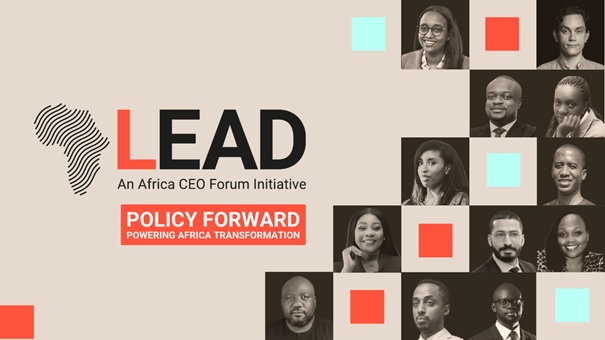
LEAD, the Africa CEO Forum’s pan-African leadership initiative for senior public decision-makers, has convened its second cohort at Mohammed VI Polytechnic University’s Rabat campus, bringing together 50 fellows from across the continent for three days of policy dialogue, peer exchange and leadership development.
Held from August 28 to 30 under the theme “Policy Forward – Powering Africa’s Transformation,” the retreat focuses on how African governments can translate policy commitments into measurable institutional delivery. Discussions are centred on modernising public institutions, financing public action, advancing agricultural transformation and building trusted digital public infrastructure.
The programme comes one year after LEAD was launched by the Africa CEO Forum to create a long-term community of senior public leaders able to strengthen state capacity, improve service delivery and deepen cooperation between governments, development institutions and private-sector actors.
The second cohort includes senior officials involved in designing and implementing economic and social policy across a range of areas, including sovereign debt management, public investment, digital identity, health, education, agriculture and financial inclusion. Organisers say the programme is intended to equip participants with practical tools, peer networks and reform experience that can be applied directly within their home institutions.
Over the three-day retreat, fellows are participating in collaborative working sessions, closed-door exchanges and discussions with political leaders, business executives and academic experts. The sessions are designed to allow public officials to compare institutional approaches, test policy ideas and develop responses to shared governance challenges.
Speakers include former Tunisian Prime Minister Mehdi Jomaa, Human Capital Africa founder and former World Bank Africa Vice President Dr Obiageli “Oby” Ezekwesili, West African Development Bank President Serge Ekué, and former Colombian Finance Minister Mauricio Cárdenas. They are expected to share perspectives on policy trade-offs, institutional reform and the choices governments face when pursuing long-term transformation.
Digital Public Infrastructure (DPI) remains a central pillar of the 2026 programme. Participants are examining how African governments can build shared, open and resilient digital systems that improve public-service delivery, support local innovation and safeguard citizens’ rights.
The discussions cover digital identity, interoperable payment systems, secure data exchange, data governance, platform interoperability and citizen protection. LEAD also aims to explore the responsible use of artificial intelligence within public administration, including its potential role in improving decision-making, strengthening state capacity and delivering more responsive public services.
The programme’s organisers argue that African governments must move beyond simply consuming imported technology. Instead, they advocate the development of local institutional capacity, interoperable systems and African-led innovation capable of creating economic value while strengthening digital sovereignty.
“Through this second cohort, we want to accelerate the transition from ambition to execution, particularly on digital public infrastructure and artificial intelligence—two decisive issues for sovereignty, state effectiveness and value creation on the continent,” Africa CEO Forum President Amir Ben Yahmed said.
LEAD is supported by a coalition of academic, institutional, financial and advisory partners, including Mohammed VI Polytechnic University, the African Development Bank, the West African Development Bank, BCG, Asafo & Co, Africa Re, the Arise Foundation and the Trade and Development Bank.
UM6P is hosting the retreat as LEAD’s academic partner and is contributing its expertise in applied research, innovation and executive education. The university said the initiative is designed to connect evidence-based research with the institutions responsible for putting public policy into practice.
The initiative is structured around three long-term priorities: modernising the state, improving public services and strengthening cooperation among governments, development institutions and the private sector. Each cohort is intended to add to a growing alumni network of African decision-makers committed to transparency, performance, innovation and regional cooperation.
As governments across the continent confront debt pressure, climate risks, uneven public-service delivery and rapid technological change, LEAD’s second cohort is intended to reinforce one central message: Africa’s transformation will depend not only on ambitious strategies, but also on the public institutions and leaders capable of delivering them.