The Sudanese Ministry of Finance has officially signed a bilateral agreement with the People’s Republic of China to cancel a significant portion of the country’s outstanding debt. Under the newly ratified protocol, which takes effect immediately, Beijing has agreed to completely write off four interest-free loans owed by Sudan.
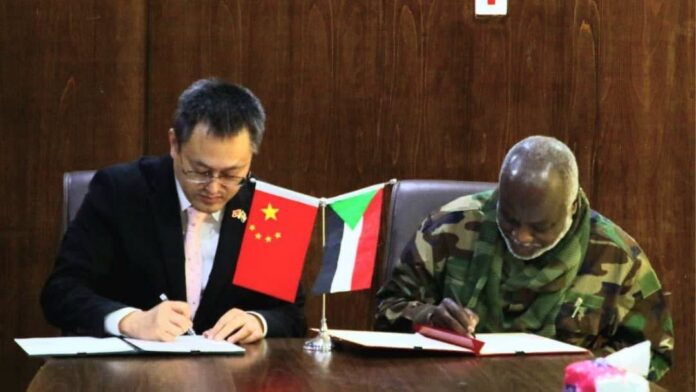
The combined value of these cancelled loans totals 344.52 million Chinese yuan, which is equivalent to approximately $50 million. The historic agreement was signed in the strategic coastal city of Port Sudan by Sudan’s Minister of Finance, Dr. Jibril Ibrahim, and Xu Jian, China’s chargé d’affaires in Sudan, representing their respective governments.
Following the signing ceremony, the Central Bank of Sudan and the China Development Bank were instructed to immediately begin the technical procedures required to settle all financial accounts relating to the cancelled loans. Dr. Jibril Ibrahim praised the long-standing and distinguished economic relationship between Sudan and China, noting that this debt relief comes at a critical juncture for the nation’s struggling economy.
The finance minister also warmly welcomed Beijing’s recent sweeping initiative to remove customs duties on goods imported into China from 50 African countries, characterizing it as a vital mechanism for boosting trade. Furthermore, Ibrahim revealed that China has pledged to support capacity-building across various Sudanese public sectors, which includes providing specialized training programs for mid-level civil servants.
Representing the Chinese government, Xu Jian reiterated Beijing’s unwavering commitment to supporting the stabilization and development of Sudan’s national economy. He emphasized that the decision to ease the country’s debt burden was aimed at strengthening practical economic cooperation and fostering long-term bilateral ties.
Beyond the immediate debt cancellation, the high-level meeting served as a forum to review the progress of several Chinese grant-funded initiatives currently underway in Sudan, including the West Omdurman abattoir project. The two delegations also meticulously discussed the implementation of an additional 200 million yuan grant previously announced by the Chinese president, which is specifically earmarked to fund critical infrastructure projects across Sudan’s energy, water, and agricultural sectors.
The timing of this agreement draws a sharp contrast in Sudan’s international relations, coming just days after the United States government announced a severe new raft of economic sanctions against the country.
The fresh American penalties, rolled out by the US Department of the Treasury’s Office of Foreign Assets Control, are tied to the newly approved “Prevention of External Aggression and Escalation of Conflict in Sudan Act of 2026.” This stringent US legislation explicitly directs American representatives at major international financial institutions, such as the World Bank and the International Monetary Fund, to strictly oppose any loans or debt relief to the Sudanese government, while completely barring foreign aid for non-humanitarian purposes and prohibiting security assistance.
Faced with tightening Western restrictions that threaten to paralyze Sudanese aviation and wider commercial banking, Khartoum is increasingly leaning on its strategic alignment with Beijing to bypass economic isolation.
During their extensive deliberations, Sudanese and Chinese officials examined various ways to overcome mounting obstacles currently affecting international banking cooperation between the two nations. Both sides heavily stressed the immense importance of swiftly resuming the domestic operations of the China National Petroleum Corporation. By reinforcing state-backed investments and securing millions in fresh development grants, the Port Sudan agreement underscores China’s calculated strategy to expand its economic footprint and maintain its role as Sudan’s primary financial lifeline amidst escalating geopolitical pressures.