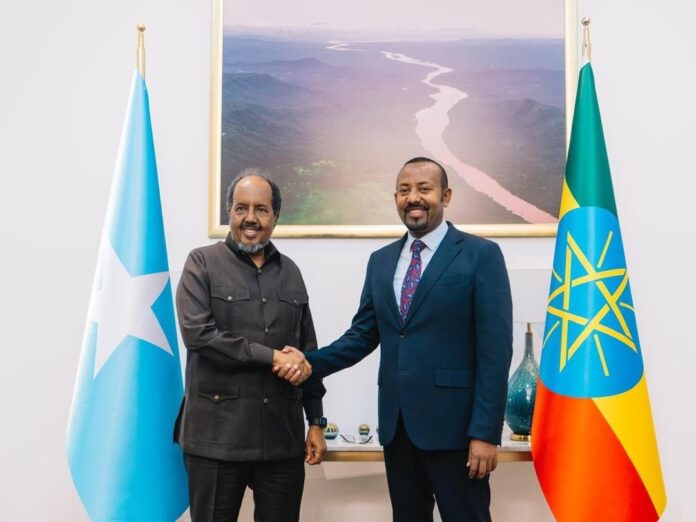
Somali President Hassan Sheikh Mohamud held high-level, bilateral talks with Ethiopian Prime Minister Abiy Ahmed on Monday. The strategic meeting, hosted in the Ethiopian capital, marked a significant milestone as both nations actively seek to repair and deepen their diplomatic ties. Coming on the heels of President Mohamud’s regional engagements in Djibouti, the official visit underscores a renewed, mutual commitment to regional stability, economic integration, and shared security frameworks between the two neighboring countries.
According to an official statement released by Villa Somalia, the discussions centered on reviving and deepening the historically profound relationship between Somalia and Ethiopia. The two leaders engaged in comprehensive deliberations on expanding cooperation across critical sectors, including cross-border security, bilateral trade, and long-term economic development. As the Horn of Africa continues to navigate complex political shifts and internal pressures, observers view this direct engagement between the heads of state as a vital step toward fostering a unified approach to the region’s most pressing challenges.
A key focus of the meeting was the urgent need for collaborative action against shared security threats that have long plagued the region. Somalia and Ethiopia share a vast, porous border and have a well-documented history of military and intelligence cooperation, particularly in countering armed extremist groups that destabilize East Africa.
By reaffirming their defense partnership, both governments aim to fortify counter-terrorism mechanisms, protect local populations, and ensure that border communities can thrive in an environment of safety and mutual trust.
Beyond defense cooperation, the bilateral talks explored new avenues for economic synergy, with an emphasis on boosting trade and unlocking mutual development opportunities. The leaders discussed how both countries could leverage regional frameworks, such as the African Continental Free Trade Area (AfCFTA) and the Intergovernmental Authority on Development (IGAD), to stimulate economic growth and enhance infrastructure connectivity.
This economic focus is seen as essential for building resilience against poverty and the escalating impacts of climate change currently affecting millions across the Horn of Africa.
The timing of the meeting is highly symbolic, occurring as both nations actively work to move past months of diplomatic friction that had previously strained their official channels. In addition to addressing policy matters, President Hassan Sheikh Mohamud took the opportunity to formally congratulate Prime Minister Abiy Ahmed on the recent electoral triumph of his Prosperity Party.
The Somali leader expressed his optimism for Ethiopia’s future under Prime Minister Abiy’s continued leadership, wishing the nation sustained progress, unity, and development.
Ultimately, the Addis Ababa summit signals a broader continental shift toward proactive dialogue and collective problem-solving. By prioritizing diplomatic engagement over previous divisions, President Mohamud and Prime Minister Abiy Ahmed have set a collaborative tone for the future. Moving forward, the success of these commitments will depend heavily on the implementation of the agreed-upon security and economic frameworks, which both leaders agree are fundamental to securing prosperity for their citizens and fostering lasting peace throughout the wider East African region.