The Intergovernmental Authority on Development (IGAD) has reaffirmed its full support for the sovereignty, unity, and territorial integrity of Somalia. Issued from the bloc’s headquarters in Djibouti, the statement warned that any actions undermining Somalia’s unity pose a significant threat not only to the Federal Republic of Somalia but also to the regional stability of the entire Horn of Africa.
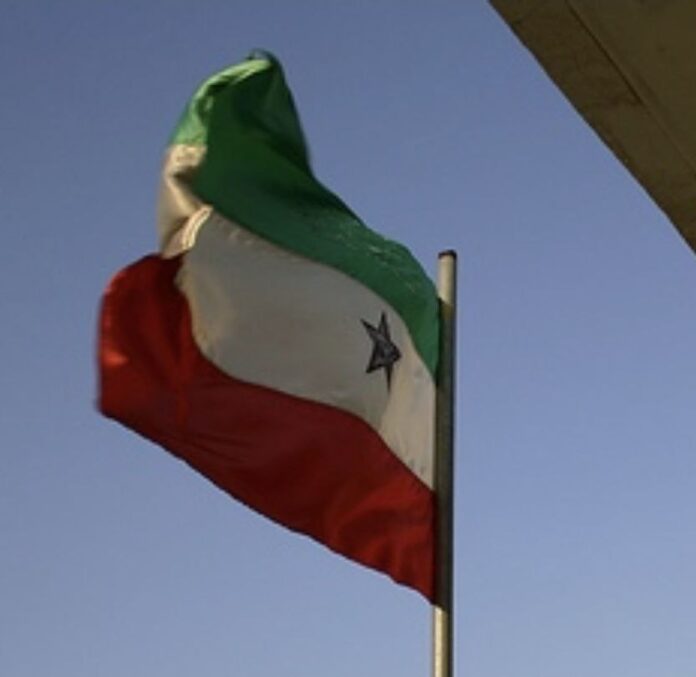
This strong statement from IGAD follows recent diplomatic developments involving Somaliland, a region that declared its independence from Somalia. According to reports, Somaliland President Abdirahman Mohamed Abdullahi opened a Somaliland embassy in Jerusalem during what has been described as a “historic” official visit to Israel. During his stay, the President held a series of discussions with Israeli Prime Minister Benjamin Netanyahu and senior members of the Knesset (the Israeli Parliament).
In his meeting with the Somaliland leader, Prime Minister Netanyahu highlighted the growing relationship between Israel and Somaliland, noting what he described as a “deep spiritual bond” between the two peoples. This diplomatic breakthrough follows Israel’s decision last December to become the first country to formally recognize Somaliland as an independent state, a move that drew sharp criticism from numerous countries and international organizations at the time.
In its statement, IGAD emphasized that its core guiding principles remain the IGAD Treaty, the Constitutive Act of the African Union, and the United Nations Charter, all of which mandate respect for the sovereignty, unity, and political independence of the Federal Republic of Somalia. The organization stressed that the unity and territorial integrity of Somalia must be fully respected.
Although the regional bloc’s statement did not explicitly name Israel or Somaliland, it made clear its strict opposition to any initiative that could challenge or be interpreted as undermining Somalia’s sovereignty. It warned that such actions could exacerbate tensions in the Horn of Africa and disrupt regional peace, stability, and cooperation. It further urged that any developments affecting Somalia’s territorial status must be handled with utmost caution and restraint, in accordance with international and regional frameworks.
Having declared independence from Somalia more than three decades ago, Somaliland operates its own government, security forces, and institutions, yet it had not previously secured full international recognition as a sovereign state. The Federal Government of Somalia continues to view Somaliland as part of its own territory and has consistently opposed any efforts by the region to attain independent diplomatic recognition.
The issue remains a highly sensitive political agenda in the Horn of Africa, driven by Somaliland’s current push to establish broader international relations on one hand, and the Somali government’s efforts to mobilize international support for its territorial integrity and state-building on the other.
Meanwhile, various analyses are emerging regarding economic and social development activities in the region. According to recent reports by The Reporter Magazine, current challenges within the Horn of Africa, particularly in Ethiopia, have gained significant attention.
Regarding the cost of living and inflation, economist Samson Berhane explained the market reality in his analysis, stating that a decrease in inflation does not equate to a decrease in the cost of living. This indicates that even if the rate of price increases slows down, the prices of basic commodities still remain beyond the purchasing power of the public.
In terms of technology and agricultural challenges, Yibel Kassa noted in his article that while tech-driven agro-insurance is highly essential in Ethiopia, it has stalled and failed to move forward due to various operational bottlenecks.
Furthermore, Yared Nigussie examined the hidden costs of transitioning to digital operations, raising the question of whether this shift is truly worth it, and scrutinized the economic pressures brought about by technological transformation. Additionally, a new practice where regional states, cities, and woredas are becoming shareholders in technology startups and private companies was presented for discussion by Dr. Brook Lakew. These domestic economic policy shifts, combined with diplomatic tensions, demonstrate that East African nations currently face the dual challenge of accelerating internal development while maintaining external regional peace.