The United Nations Office for the Coordination of Humanitarian Affairs (OCHA) in South Sudan has announced that the country’s escalating overlapping crises have reached a critical stage following the release of the 2025 South Sudan Humanitarian Fund (SSHF) Annual Report. South Sudan has been plunged into severe hardship due to climate shocks, localized conflicts, disease outbreaks, and economic decline. Additionally, a rising influx of refugees and returnees fleeing neighboring Sudan has put immense pressure on the highly limited infrastructure in border areas. By the end of 2025, nearly 1.3 million refugees had entered the country, significantly driving up humanitarian assistance needs.
The report highlights that the reduction in international donor funding for South Sudan has reached an alarming level. In 2025, the humanitarian fund (SSHF) received just 32.42 million USD from 12 donors. This amount represents a 10 million USD decrease compared to 2024 and stands as the lowest funding received since 2020. Consequently, the 2025 Humanitarian Needs and Response Plan (HNRP) was only 42.1 percent funded out of its targeted total, marking a massive drop from the 71.8 percent funding level achieved in 2024.
The Netherlands was the leading donor, contributing 10.7 million USD, followed by Germany at 5.2 million, Ireland at 4.3 million, the United Kingdom at 3.8 million, Sweden at 3 million, and Canada at 2.5 million USD. Other participants in the fund included Switzerland, Norway, Luxembourg, Jersey, and the Philippines. However, because the majority of the funding arrived late in the year, the fund’s ability to plan ahead and its flexibility to respond quickly to new sudden emergencies was severely constrained. Looking ahead to 2026, projections indicate that more than 10 million people—representing two-thirds of the country’s population—will require urgent humanitarian assistance.
Despite the funding shortages, the fund managed to maximize its resources by prioritizing critical needs, allocating 44.8 million USD across 103 projects implemented by 57 partners. This effort successfully reached 1.8 million people living in areas facing severe hardship. The fund utilized both standard and reserve allocation strategies. Through the standard allocation launched in June 2025, 20 million USD was directed toward eight high-need counties across Jonglei, Upper Nile, Unity, Northern Bahr el Ghazal, and Abyei to deliver integrated healthcare, nutrition, and clean water access services.
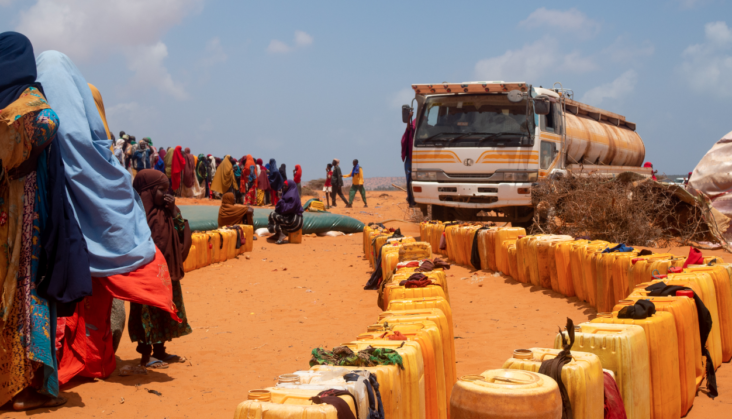
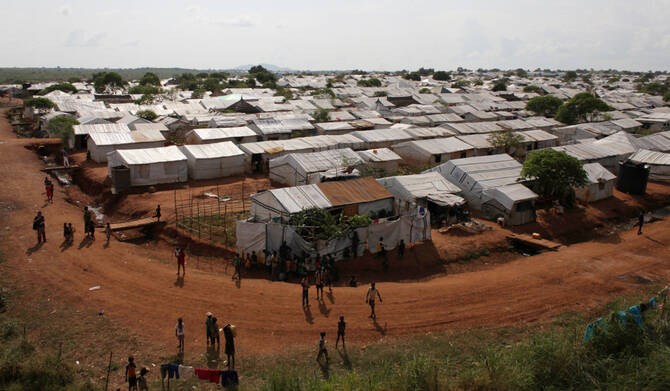
Furthermore, rapid responses were deployed to address five acute emergencies. To curb a cholera outbreak that saw 71,825 suspected cases and 1,194 deaths across 55 counties between January and August 2025, water and health infrastructures were established in the Bentiu and Malakal displacement camps. Following severe floods that displaced over 1.02 million people in October, reserve funds were used to deliver emergency shelter and nutritional supplies before transport roads became completely impassable. Immediate healthcare and protection services were also provided to arriving refugees and returnees along the Renk and Aweil corridors.
Among those assisted, 58 percent (1.0 million) were women and girls, while 129,000 were people living with disabilities. Through the fund, 3.5 million people received health services, 635,000 individuals received vegetable production kits, 528,000 people gained access to clean drinking water, and 299,000 people received emergency cash assistance.
A major success highlighted in the 2025 report was the significant increase in financial support directed toward local and national organizations, advancing the localization agenda. The fund provided 45 percent (20.1 million USD) of its allocations directly to 32 national non-governmental organizations (NGOs). This represents a major leap from the 30 percent allocated in 2024, with 28 percent of these localized funds specifically targeting national, women-led organizations. National NGOs proved indispensable due to their community acceptance and ability to operate in highly volatile and hard-to-reach areas. To support this shift, capacity-building training was provided to 259 humanitarian workers, enabling seven local organizations to successfully manage larger funding portfolios.
The fund also piloted a 48-hour rapid response financing mechanism in border areas. Although the sudden displacement spikes did not unfold exactly as anticipated by the specific funding triggers, the fund flexibly adjusted and repurposed the resources to alleviate cumulative pressures on host communities and strengthen social cohesion.
Ultimately, these statistical figures translate into real human stories. For instance, in Renk County, a two-year-old child named Sunday arrived from Khartoum, Sudan, severely weakened by malnutrition and malaria; however, he made a full recovery at an SSHF-funded nutrition center. Similarly, in Malakal, a returnee named Joseph Majiik was provided with a fishing kit, which allowed him to successfully feed his family and sell the surplus to cover his daily household needs. Reflecting on the uncertain future, South Sudan Humanitarian Coordinator Anita Kiki Gbeho called on donors to provide more consistent and predictable aid, emphasizing that sustaining life-saving work requires active engagement and the diversification of funding sources.