
Compact Implementation Roadmap Kenya is stepping up its national development trajectory to achieve universal energy access by the end of the decade. Under the ambitious Mission 300 National Energy Compact, the country is executing a comprehensive strategy designed to transition its power landscape entirely toward sustainability, economic resilience, and broad-based industrial growth.
At the heart of the national compact is a commitment to close the remaining access gaps across the country. Current policy frameworks are geared toward scaling national electricity connectivity from its existing baseline of 75% to a complete 100% access rate by 2030. Alongside power connectivity, the compact places an equally heavy emphasis on nationwide transitions to clean cooking solutions, aiming to eliminate traditional biomass reliance that has historically affected rural and urban households alike.
To sustain this expanded network, the country’s generation capacity is slated for a massive upgrade. Plans are underway to expand total renewable energy capacity from 2,627 MW to 5,952 MW, harnessing a diverse mix of geothermal, wind, solar, and hydropower resources. Furthermore, the strategy addresses the physical backbone of the grid by prioritizing the development of an additional 8,000 kilometers of transmission lines, ensuring that generated power can be reliably evacuated and distributed to industrial hubs, agricultural zones, and remote communities alike.
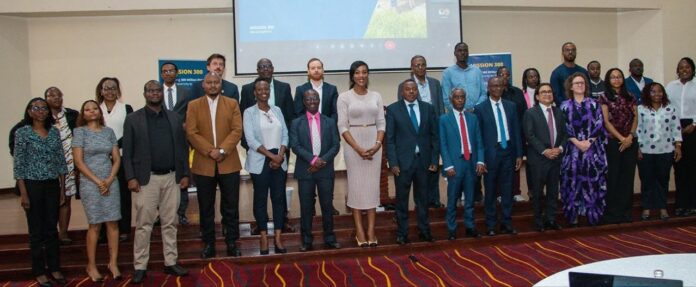
Translating high-level policy commitments into tangible ground reality requires rigorous coordination. To achieve this, the Government of Kenya and the African Development Bank Group convened a two-day Compact Implementation Support Workshop on July 8–9, 2026, with facilitation support from Sustainable Energy for All (SEforALL).
The high-level engagement brought together Kenya’s Compact Delivery and Monitoring Unit (CDMU), key government ministries, international development partners, and private sector stakeholders. Discussions centered on identifying implementation bottlenecks, refining financing frameworks, outlining technical assistance requirements, and reviewing the country’s evolving project pipeline to establish a firm 12-month operational workplan.
Supported by the Bank Group’s Africa Energy Sector Technical Assistance Program, stakeholders focused heavily on formulating the Compact Implementation Support Document (CISD). This country-owned instrument serves as an operational blueprint, defining clear institutional responsibilities, sequenced reform actions, monitoring mechanisms, and risk-mitigation strategies.
Speaking on the strategic vision of the roadmap, Isaac Kiva, Secretary for Renewable Energy at the Ministry of Energy and Petroleum, emphasized the country’s proactive stance. He noted that the compact establishes a clear sequence of investments and institutional coordination overseen directly by the Compact Delivery Secretariat to guarantee full operationalization.
Wale Shonibare, Bank Group Director for Energy Financial Solutions, underscored that the ultimate metric of success lies in measurable delivery on the ground, praising Kenya’s commitment to building strong public-private partnerships.
These efforts build upon significant milestones achieved since the initial launch of the compact in 2025, which included setting up transaction advisory services for major generation and transmission projects, introducing competitive solar and wind auctions, and establishing Kenya’s Country Platform to turn national priorities into investable projects. A primary deliverable of the recent workshop was the identification of 10 catalytic priority reform actions designed to fast-track regulatory improvements and unlock private sector capital.