
East Africa has cemented its position at the absolute forefront of global economic engagement, driven by a historic surge in Chinese investments under the Belt and Road Initiative (BRI) during the first half of 2026. According to the China Belt and Road Initiative (BRI) Investment Report 2026 H1, Africa nearly tripled its Chinese BRI investment volume compared to the same period in 2025, reaching a staggering USD 33.5 billion.
At the heart of this regional boom is Ethiopia, which recorded the highest growth in total BRI engagement globally, surging by an impressive USD 18.9 billion. The East African nation has rapidly transformed into a magnet for high-value green infrastructure and advanced manufacturing projects, steering a broader continental shift toward sustainable development and industrial localization.
Ethiopia’s remarkable economic momentum in early 2026 was anchored by monumental agreements in green energy generation and industrial technology. Most notably, a sweeping partnership between the Ethiopian Investment Commission (EIC) and China’s Mingyang Smart Energy Group expanded into a licensed, revised investment totaling USD 14.17 billion.
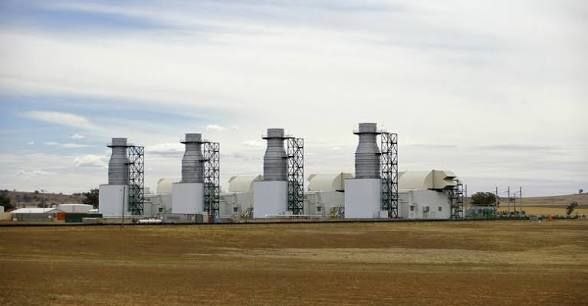
Originally introduced as a USD 10 billion Memorandum of Understanding at the 4th “Invest in Ethiopia” Forum, the expanded project encompasses massive green energy generation assets and cutting-edge green ammonia production facilities. Phase 1 of the initiative alone allocates USD 7.47 billion toward physical generation assets. This strategic push is designed to fundamentally diversify Ethiopia’s national energy matrix, which has historically relied heavily on hydropower, shielding the country’s grid against climate-induced seasonal vulnerabilities.
This project stands out as one of the largest private foreign direct investments in Ethiopian history. It aligns seamlessly with a broader trend across East Africa and the wider BRI network, where private enterprises are increasingly taking the lead on cross-border development through direct balance-sheet financing.
While regions like the Middle East dominated large-scale construction contracts—led by massive infrastructure commitments in the UAE, Saudi Arabia, and Kuwait—Africa emerged as the undisputed crown jewel for direct investments. Analysts attribute Africa’s stellar performance to a combination of lower manufacturing costs, strategic proximity to international markets, and the growing necessity for global supply chain resilience.
Amid rising international trade frictions, tariffs imposed by Western economies, and global fossil fuel price volatility, East African nations like Ethiopia are positioning themselves as vital manufacturing and green-tech hubs. By fostering localized processing and renewable energy production, these countries are capturing high-value investments that move far beyond traditional infrastructure borrowing.
Globally, the first half of 2026 proved to be the greenest period in BRI history. Total energy-related engagement reached a remarkable USD 36.3 billion—nearly double the figures seen in any previous first half-year outside of 2025. Crucially, **56% of China’s total energy engagement was green**, setting a historic record in both absolute and relative terms.
Across the BRI, green energy and hydropower projects surpassed USD 20.1 billion in the first six months of 2026. This surge confirmed over 28 gigawatts (GW) of new power generation capacity, dominated by solar, wind, and hydro additions.
This green pivot is heavily intertwined with China’s promotion of the “New Three” growth sectors: electric vehicles, advanced batteries, and renewable energy technologies. In East Africa and neighboring regions, investments are increasingly targeting the entire green supply chain—from utility-scale solar arrays and wind farms to green hydrogen and ammonia synthesis—sidestepping older, carbon-intensive dependencies.
The 2026 H1 data also highlights a structural evolution in how BRI projects are executed. Globally, the average deal size for investments reached a record USD 958 million, fueled by multi-billion-dollar industrial and energy undertakings.
Furthermore, the private sector’s footprint has expanded dramatically. Privately owned Chinese enterprises accounted for nearly 48% of total engagement value in H1 2026, a sharp rise from just 12.5% in 2020. While state-owned enterprises (SOEs) remain dominant in massive civil construction and transport projects, private green-tech and energy giants like Mingyang Smart Energy are steering the investment landscape.