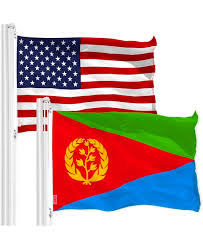
The United States government is currently conducting a study to ease long-standing economic and diplomatic sanctions imposed on Eritrea. This potential move is reportedly driven by Eritrea’s strategic role in efforts to control escalating security threats in the Red Sea and to counter attacks by Iran-backed Houthi rebels on international shipping.
Eritrea possesses a coastline stretching over 700 miles along the Red Sea, a corridor vital for the global movement of oil and goods. As tensions between Iran and the West intensify—nearly threatening the closure of the Strait of Hormuz—the importance of the Red Sea as an alternative trade route has doubled.
Attacks by Yemen’s Houthi rebels on vessels passing through the Red Sea are exerting significant pressure on the global economy. Although the U.S. maintains a military base in Djibouti, cooperation with Eritrea’s ports and coastline has become crucial for Washington to effectively repel Houthi attacks and secure the region. This necessity is said to be pushing the Trump administration to restore relations with Eritrea to their former status.
However, this shift in U.S. diplomacy is sparking strong opposition and concern among human rights activists. Eritrea is often referred to as the “North Korea of Africa” due to human rights violations against its citizens, restrictions on religious freedom, and its treatment of political prisoners.
Specifically, the U.S. Commission on International Religious Freedom (USCIRF) has noted that Eritrea has been designated as a “Country of Particular Concern” (CPC) since 2004 due to religious persecution. Reports indicate that hundreds of Christians, Jehovah’s Witnesses, and followers of other faiths are detained without trial in desert prisons and metal shipping containers. There are fears that if the U.S. lifts sanctions, these oppressed citizens will be forgotten, and the move will be seen as an endorsement of the Asmara government’s abuses.
U.S. sanctions on Eritrea are primarily linked to the Tigray war and alleged human rights violations committed by Eritrean troops. These sanctions, based on the Global Magnitsky Act target high-ranking Eritrean military officers and business entities owned by the ruling party (PFDJ).
Nevertheless, there are indications that the Republican administration may prioritize “national interest” and security cooperation over human rights issues. Current discussions center not on a total lifting of sanctions, but on providing concessions in specific sectors to allow Eritrea to provide port services and security intelligence to Western powers.
A renewal of U.S.-Eritrea relations could shift the balance of power in the region. On one hand, it offers Washington an opportunity for reliable security control in the Red Sea; on the other, it is argued that it risks sacrificing democratic and human rights values for political gain. The international community, particularly religious institutions and human rights organizations, is pivoting to pressure the U.S. to ensure that any agreement with Eritrea centers on the freedom and rights of its citizens.