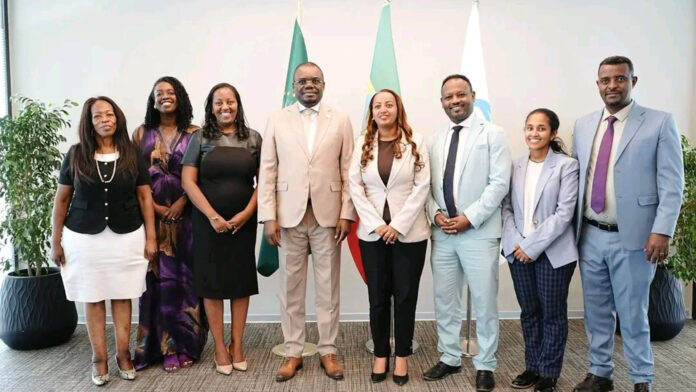
More than 800 participants from over 100 countries are gathering in Ethiopia from 3 to 5 November 2026 for the seventh Emergency Medical Teams (EMT) Global Meeting, the first ever held in the WHO African Region. The landmark event, hosted by the Government of Ethiopia in collaboration with the World Health Organization (WHO), with support from Macao SAR and the Robert Koch Institute, brings together government representatives, health professionals, researchers and humanitarian partners to advance the development of national emergency medical teams.
The meeting focuses on strengthening countries’ capacity to provide timely, quality clinical care during emergencies. Guided by the EMT 2030 Strategy and lessons drawn from recent emergencies, discussions centre on sustainable financing, quality standards, operational readiness and international cooperation. These elements are described as essential to establishing nationally led EMT programmes that strengthen the health emergency workforce and support health services under pressure.
Emergency Medical Teams are groups of health professionals trained and equipped to provide care during outbreaks, disasters, conflicts and other emergencies. They support the affected country’s health system, working under national coordination and according to agreed standards for safe, quality care.
In a significant milestone ahead of the summit, Ethiopia’s national EMT achieved WHO international classification in September 2026, following an assessment of its clinical services, logistics and operational readiness against international standards. The classification underscores the country’s growing capacity to respond to health emergencies with qualified, self-sufficient teams.
Across the WHO African Region, 30 countries are developing national EMT capacities, supported by the Regional Framework on Emergency Medical Teams 2026–2030. The Regional EMT Training and Knowledge Hub in Addis Ababa provides a platform for training, simulation exercises and the exchange of expertise. WHO supports this work through technical guidance, mentoring and readiness assessments.
“National emergency medical teams give countries the capacity to act quickly when health services are overwhelmed, bringing critical care to people who might otherwise go without,” said Dr Mohamed Janabi, WHO Regional Director for Africa. “Investing in these teams means investing in people who know their communities, understand their health systems and can also support neighbouring countries during emergencies.”
Building a national team involves practical decisions about who can be released from regular duties, how equipment will be transported and how deployments will be funded. The meeting provides a forum for countries to learn from one another’s experience in addressing these challenges, while helping partners understand where support is most needed.
“Strong national teams give countries more capacity to respond quickly and organize assistance according to local needs,” said Professor Francis Chisaka Kasolo, WHO Representative to Ethiopia. “Holding this meeting in the African Region brings countries’ experience directly into the global discussion. It is an opportunity to agree on how we can better support teams before an emergency and work together during a response.”
The meeting offers countries and partners an opportunity to identify investment needs and define their contributions, with the aim of building stronger, self-reliant emergency medical capacity across the region and beyond.