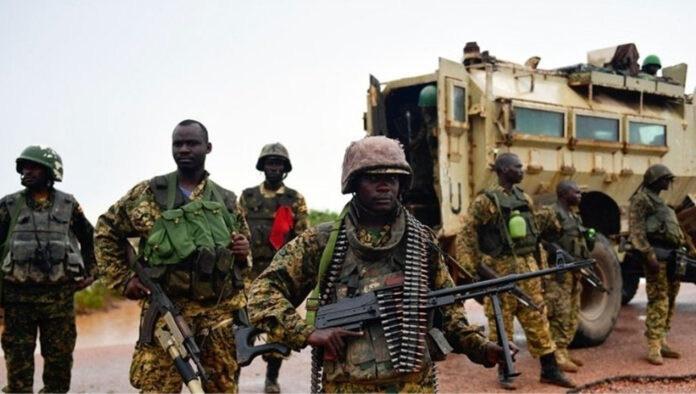
Uganda has officially commenced the withdrawal of the Uganda People’s Defence Forces (UPDF) from Somalia after nearly two decades of active involvement, marking a major milestone in the country’s military engagement in the Horn of Africa.
The Chief of Defence Forces (CDF), Gen Muhoozi Kainerugaba, confirmed the development on Thursday, signaling the start of a security handover to the host nation.
“As we promised, we have started withdrawing UPDF from Somalia. After 20 years of a lot of blood and sacrifice, we are handing over security to our Somali brothers,” Gen Muhoozi posted on X on October 29, 2026.
The withdrawal comes amid mounting financial constraints and major diplomatic shifts surrounding the African Union Support and Stabilization Mission in Somalia (AUSSOM). In July 2026, the United States informed the African Union that it would not support renewing the mission’s mandate before the United Nations Security Council in December, alongside a 25 percent funding cut by the United Nations Support Office in Somalia (UNSOS) that has impacted frontline operations.
Despite these growing international funding cuts, Ugandan authorities had earlier indicated that regional solidarity would remain intact regardless of foreign financial support. Addressing the Extraordinary Summit of Heads of State of Troop-Contributing Countries at Speke Resort Munyonyo on July 31, 2026, President Museveni declared that African nations possess the resilience to tackle security challenges on their own.
“If the international community wants to pull out, let them. All the problems we have solved here, we solved without their support. We got support from our brothers. When we fought Amin, it was Tanzania and Mozambique. On Sudan, it was us. Somalia will not be abandoned. We have the capacity. Whether others pull out or not, we shall stand,” President Museveni stated.
The President defended Uganda’s initial 2007 deployment, explaining that the military intervention was driven by regional security imperatives and principle rather than foreign interests.
“When therefore we decided to involve ourselves in Somalia, it was out of principle and strategy. We did not accept the chauvinism of Islamic groups who come here and waste our time… The second reason was to extend solidarity to Ethiopia… We had to stand with them,” Mr Museveni noted.
During the pre-summit military deliberations in July, Gen Muhoozi called on regional defence leaders to adapt to shrinking international resources and establish self-sustaining African-led operational frameworks before UNSOS wraps up its logistical support by December 31, 2026.
“These are difficult circumstances, but they also call for our unity, creativity, and resolve,” Gen Muhoozi told regional military chiefs. “The future of our mission, and the sacrifice and progress we have all made together in Somalia, depend on the quality of the decisions we make at moments like this. As Chiefs of Defence Forces, we are responsible for providing clear military guidance and strategic direction at a time when the mission environment is changing.”
Continental leadership has maintained that support for Somalia’s peace transition will endure. During the July summit, the Chairperson of the African Union Commission, Mr Mahmoud Ali Youssouf, reassured the region of continued backing while paying tribute to the peacekeeping troops.
“I wish to assure the government and people of Somalia that the Commission will continue to mobilize all the political, diplomatic, and financial support necessary for the success of this mission,” Mr Youssouf said.
Somalia’s military leadership also recognized the role played by foreign troops in stabilizing the nation over the past two decades. Expressing gratitude to the troop-contributing nations, the Commander of the Somali National Armed Forces, Brig Gen Ibrahim Mohamed Mahmoud, commended the peacekeeping forces for their long-standing sacrifices. Echoing this sentiment, the Head of the AU Peace Support Operations Division, Brig Gen Cheick Dembele, emphasized that unbroken African solidarity remains vital as the continent works toward building robust Somali security institutions capable of maintaining lasting peace.
Uganda made history in 2007 as the first nation to deploy troops to Somalia under the original African Union Mission in Somalia (AMISOM). Over the last 19 years, the UPDF played a central role alongside the Somali National Army in liberating key strategic territories from the Al-Shabaab militant group and safeguarding critical government infrastructure.
Following AMISOM’s transition into AUSSOM in 2024, the mission shifted focus toward strengthening Somali national security bodies, protecting civilians, and preparing Somali forces to take full responsibility for the country’s security.