The leadership of Somalia’s House of the People has begun penalizing lawmakers who routinely fail to attend scheduled sessions. For years, chronic absenteeism among members of parliament (MPs) persisted with virtually no formal repercussions. However, a strict financial enforcement mechanism is now actively under way, resulting in substantial pay cuts for non-attending legislators.
The impact of the crackdown became evident this week after several lawmakers publicly voiced dissatisfaction over unexpected deductions from their monthly earnings. Reports indicate that between eight and 13 MPs who failed to attend at least seven sessions within a single month were hit with mandatory penalties exceeding $1,000 from their paychecks.
While the sudden enforcement has sparked heated debate within the legislative chamber, the legal basis for the penalties is far from new. The regulation was formally integrated into the House of the People’s official rules of procedure at the end of 2022 following amendments approved under Article 23. Despite its passage nearly four years ago, the mechanism remained largely unapplied, with previous leadership efforts limited to public shaming by reading out the names of missing lawmakers during live broadcasts. Without financial consequences, those measure did little to curb truancy.
Under the current operational framework, the House convenes three times a week with clearly defined compliance thresholds. Accumulating three late arrivals is officially recorded as one full day of unauthorized absence, while three unexcused absences trigger a formal written reprimand. Missing seven sessions within a single calendar month leads to an immediate referral to the Ethics Committee alongside a mandatory 20% deduction from the lawmaker’s total monthly compensation. Given that a Somali MP receives a basic salary of $5,240 per month, the one-fifth penalty amounts to exactly $1,048 per offending member.
Crucially, the leadership has also closed a long-standing loophole previously exploited by some legislators. Under the strict new directives, lawmakers who arrive at the building, sign the official attendance registry, and subsequently depart while proceedings are under way are officially classified as absent and subjected to the same financial penalties.
This aggressive posture comes as chronic absenteeism repeatedly crippled the legislative process in Mogadishu, forcing the cancellation or suspension of numerous sittings. To legally conduct official government business, the House of the People requires a minimum quorum of more than 140 MPs present in the chamber. Because standing orders permit only 30 members to be on official leave at any given time, a quorum failure indicates that over 100 lawmakers are absent without authorization—a trend leadership notes severely damages public trust and halts state governance.
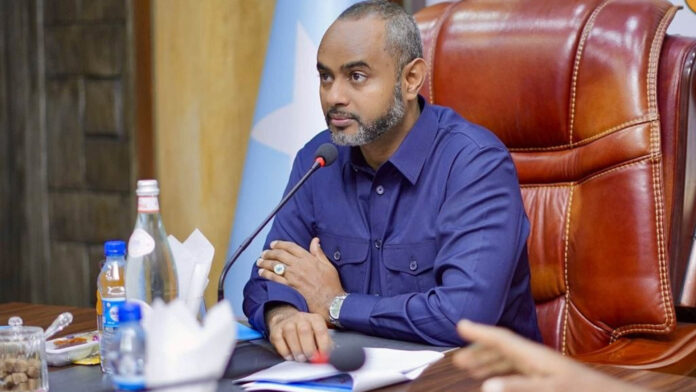
Addressing the assembly regarding the salary cuts, House Speaker Abdulkadir Mohamed Nur delivered an uncompromising message to the floor. He emphasized that it is fundamentally unfair to reward absent members equally alongside dedicated colleagues who make sacrifices to fulfill their duties, declaring that he would not tolerate a system where absent members receive equal compensation. He warned the assembly that even if only two MPs show up for a session, only those two will be paid.