South Sudan is positioning itself as a central frontier for East African energy investment, extending a formal invitation to international investors for the upcoming seventh South Sudan Oil & Power (SSOP) conference. Scheduled for November 24 and 25 in Juba, the high-level summit is being held in official partnership with the Ministry of Petroleum under the theme “Resource Renaissance: Energy-Fueled Growth for a New Generation.”
The conference aims to pitch lucrative opportunities spanning oil and gas extraction, midstream infrastructure, refining capacity, and power generation. However, while the economic potential on offer is substantial, industry analysts note that prospective backers will need to weigh these opportunities against complex geopolitical and logistical realities.
According to the Ministry of Petroleum, a significant inventory of assets is currently on the table, highlighted by 14 open exploration blocks designated as A1 through A6, B1, B4, C1, C2, D1, D2, E1, and E2. Notably, five of these—blocks A1, A4, B1, E2, and D1—have been earmarked for the nation’s inaugural official licensing round, presenting a rare entry point for new market players.
Official figures place current national production at approximately 170,000 barrels per day (bpd), though government projections are far more aggressive. Juba has set a short-term target of 230,000 bpd, with a long-term goal of scaling output to 450,000 bpd. Performance indicators reflect steady momentum in specific regions; the Greater Pioneer Operating Company (GPOC), which manages Blocks 1, 2, and 4, recently scaled production to 60,000 bpd—its highest output level since beginning operations in 2005. The government is pushing for that specific venture to reach 75,000 bpd by the close of 2026.
Industry data indicates that South Sudan holds an estimated 3.5 billion barrels of proven oil reserves, with nearly 90 percent remaining untapped, signaling vast room for expansion.
Beyond crude extraction, the Ministry is aggressively pursuing downstream development to curb heavy reliance on imported petroleum products. A robust pipeline of refinery projects has been cataloged, featuring initiatives in Jemeza, Akon, Bentiu, Thiangrial, and Trinity.
A major pillar of this strategy involves a partnership with the Superior Process Engineering Company to develop 60,000 bpd of new refining capacity. This initiative kicks off with a 30,000 bpd facility at Tharjiath in Unity State. Furthermore, a strategic memorandum signed in July with Bianchi Gold Trading Investment Company encompasses a comprehensive scope covering exploration, infrastructure, storage facilities, and local refineries.
Despite the optimistic growth roadmap, South Sudan’s economy remains uniquely vulnerable, riding heavily on a single commodity and a fragile export route. Petroleum revenues account for roughly 79 percent of the national budget. At the same time, the government is navigating significant domestic milestones, having allocated roughly $33 million toward general elections scheduled for late December.
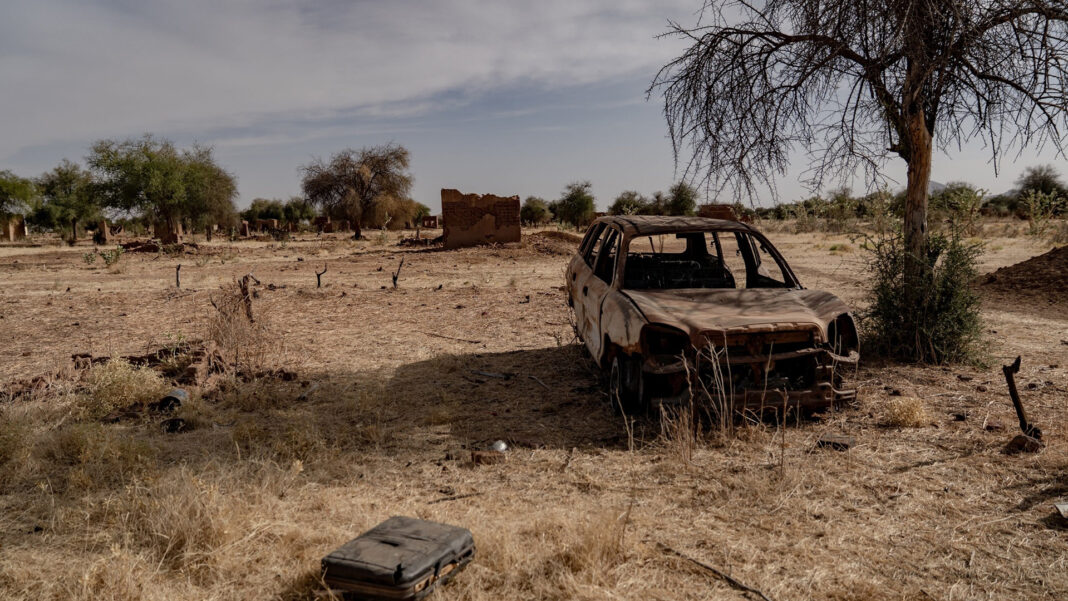
The country’s greatest systemic weakness remains geography. As a landlocked nation, South Sudan relies entirely on pipelines traversing neighboring Sudan to reach Red Sea ports. Prolonged conflict in Sudan previously shuttered the primary export pipeline for extended stretches, triggering sharp economic contractions noted by the World Bank. Security threats remain active; security disruptions and localized conflicts have periodically threatened critical installations like the Heglig and Al Jailyin facilities, resulting in brief export halts.
Compounding these physical risks are complex financial arrangements. Reports indicate that factions controlling transit zones collect per-barrel transit fees on South Sudanese crude, impacting net revenues. Although a tripartite security agreement established between regional forces in late 20th-century fashion aims to safeguard energy infrastructure, investors must factor in the inherent risks of relying on export corridors managed by parties embroiled in active internal conflicts.